Best Smart Thermostats 2026 for Energy Savings
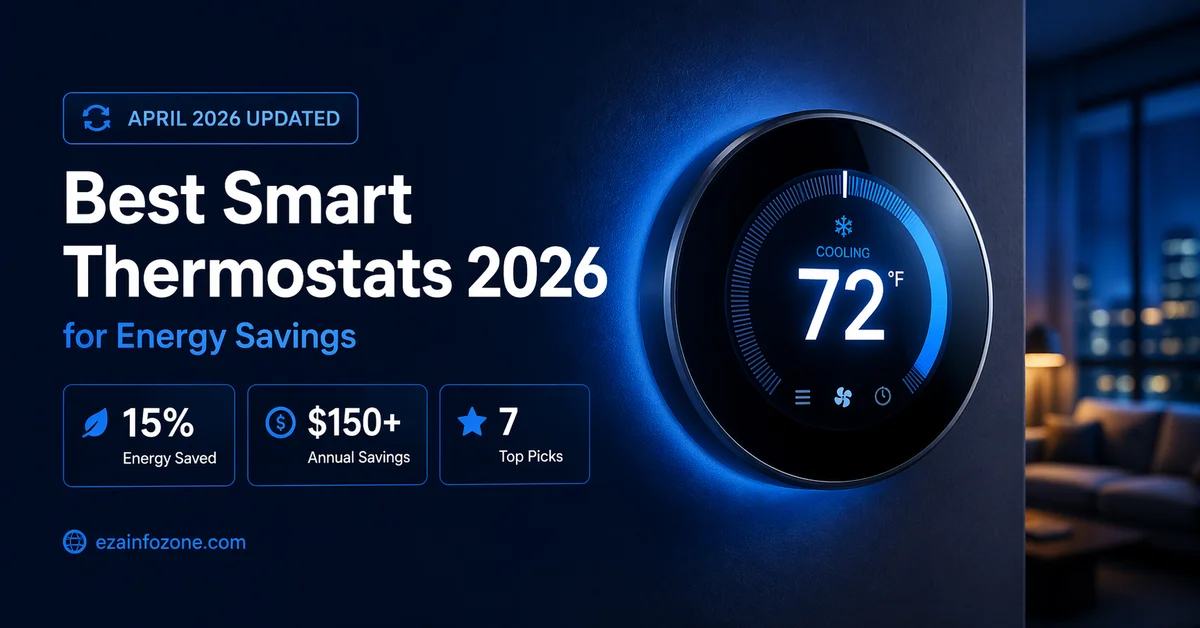
Best Smart Thermostats 2026: Top Picks for Energy Savings
We tested and ranked the best smart thermostats for energy savings in 2026 — from AI-learning models to budget-friendly picks — so you can cut heating and cooling bills without sacrificing comfort.
The Google Nest Learning Thermostat (4th Gen) is the best smart thermostat for most homes in 2026 — it learns your schedule, saves up to 15% on energy bills, and works with Alexa, Google Home, and Apple HomeKit. Budget pick: Amazon Smart Thermostat at under $60.
What Is a Smart Thermostat?
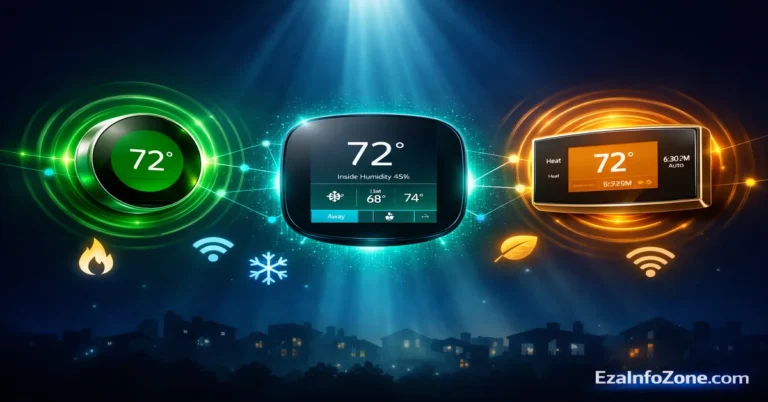
A smart thermostat is a Wi-Fi enabled device that connects to your home’s HVAC system and lets you control your heating and cooling from your smartphone — from anywhere in the world. Unlike basic programmable thermostats, smart models learn your schedule, detect when you’re home or away using geofencing, and automatically adjust temperatures to save energy without you lifting a finger.
In 2026, the best smart thermostats go further — they integrate with voice assistants like Alexa and Google Assistant, provide monthly energy reports, and some even connect with your solar panels or smart energy systems to maximize savings.
Best Smart Thermostats 2026 — Top 7 Picks
After reviewing specs, user feedback, and energy-saving performance, here are the top smart thermostats for energy savings in 2026:
The Nest Learning Thermostat 4th Gen is the gold standard in 2026. It uses AI to learn your temperature preferences within a week and builds an automatic schedule — no manual programming needed. The new color display shows weather, time, and energy usage at a glance.
- Self-learning AI schedule
- Works with all major platforms
- Elegant premium design
- Monthly energy reports
- No C-wire needed
- Most expensive option
- Needs Google account
- No room sensors included
The ecobee SmartThermostat Premium stands out with built-in Alexa and room sensors that detect which rooms are occupied — heating or cooling only where needed. It supports more smart home platforms than any other thermostat in 2026, making it ideal for complex setups.
- Built-in Alexa speaker
- Room sensor included
- Widest platform support
- Excellent energy reports
- Occupancy-based heating
- Expensive for full multi-room setup
- App can be slow at times
At under $60, the Amazon Smart Thermostat delivers surprisingly strong performance. It works seamlessly with Alexa routines, supports geofencing, and carries Energy Star certification. For renters or first-time smart home users, this is the best entry point in 2026.
- Very affordable price
- Easy Alexa integration
- C-wire adapter included
- Energy Star certified
- Simple installation
- Alexa-only ecosystem
- No learning features
- Basic display
The standard Google Nest Thermostat is perfect if you’re in the Google ecosystem and want a clean, affordable upgrade from a basic thermostat. The unique mirror-like display blends into any wall, and the touch-strip interface is incredibly intuitive.
- Beautiful minimal design
- No C-wire needed
- Affordable Nest option
- Geofencing built-in
- No self-learning AI
- No Apple HomeKit
- Basic app features
The Honeywell Home T9 is the best option for Apple HomeKit users in 2026. It supports Siri voice control natively and optional room sensors let you focus heating on occupied spaces — saving significant energy in larger homes.
- Full Apple HomeKit support
- Optional room sensors
- Works with all platforms
- Reliable Honeywell brand
- Requires C-wire
- Sensors sold separately
- Bulkier design
Specifically designed for high-voltage heating systems like electric baseboard heaters — a gap most thermostats cannot fill. If you have electric baseboards, Mysa is your only real smart option in 2026. Works with Alexa, Google, and HomeKit.
The Emerson Sensi Touch 2 is landlord-friendly, easy to install without an electrician, and works reliably without a C-wire in most setups. A practical choice for renters who want smart control without making permanent changes.
Quick Comparison Table — Best Smart Thermostats 2026
| Model | Price | Learning AI | HomeKit | Room Sensors | Best For |
|---|---|---|---|---|---|
| Nest Learning 4th Gen | ~$249 | ✔ | ✔ | ✘ | Best Overall |
| ecobee Premium | ~$219 | ✔ | ✔ | ✔ | Families / Multi-Room |
| Amazon Smart | ~$59 | ✘ | ✘ | ✘ | Budget / Renters |
| Google Nest | ~$129 | ✘ | ✘ | ✘ | Google Users |
| Honeywell T9 | ~$179 | ✘ | ✔ | Optional | Apple / HomeKit |
| Mysa V2 | ~$119 | ✘ | ✔ | ✘ | High-Voltage Heating |
| Emerson Sensi 2 | ~$99 | ✘ | ✘ | ✘ | Renters |
How Much Can a Smart Thermostat Save You in 2026?
This is the question everyone asks — and the answer is more than most people expect. Based on real-world usage data and Energy Star research, here’s what you can realistically save:
If your annual heating and cooling bill is around $1,200, a smart thermostat with geofencing and a learning schedule can realistically save you $150–$200 per year. Over 5 years, that’s $750–$1,000 in savings — well beyond the upfront cost of even a premium model.
Key Features to Look For in a Smart Thermostat 2026
1. Learning AI & Auto-Scheduling
The best smart thermostats for energy savings in 2026 use machine learning to track your daily patterns and build an automatic schedule. After about a week, models like the Nest Learning Thermostat need zero manual input — they just work around your life.
2. Geofencing Technology
Geofencing uses your phone’s location to detect when you leave home and automatically sets the thermostat to an energy-saving mode. When you’re heading back, it warms or cools the house so it’s comfortable on arrival. This single feature can save 10%+ on energy bills alone.
3. Room Sensors
Standard thermostats heat or cool your entire home based on one location’s reading. Smart thermostats with room sensors — like the ecobee — detect which rooms are actually occupied and direct energy there only. For multi-bedroom homes, this is a game-changer.
4. Smart Home Integration
In 2026, your thermostat should work seamlessly with your existing smart home ecosystem. Check compatibility with Alexa, Google Assistant, Apple HomeKit, and Samsung SmartThings before buying. The ecobee supports all four — most others support two or three.
5. Energy Reports & Insights
Premium smart thermostats send monthly energy reports to your app, showing exactly how much you used, when peak usage occurred, and tips to save more. This visibility alone helps most households reduce consumption by changing habits.
Smart Thermostat Compatibility Guide 2026
- C-Wire: Most smart thermostats need a C-wire for constant power. Check your current wiring — if no C-wire, choose Nest Learning (has battery backup) or Amazon Smart (includes adapter).
- HVAC System: Standard systems work with all models. Heat pumps, zoned systems, or high-voltage baseboard heaters need specific models (Mysa for baseboard).
- Voltage: Most thermostats are 24V (low voltage). Electric baseboards are 120V/240V — only Mysa supports these.
- Smart Platform: If you use Apple HomeKit, choose ecobee, Honeywell T9, or Nest Learning 4th Gen. Amazon ecosystem? Amazon Smart Thermostat is simplest.
Do You Really Need a Smart Thermostat in 2026?
A smart thermostat makes the most sense if you are away from home regularly, have an older programmable thermostat, or want to integrate heating and cooling into a broader smart home setup. The energy savings alone typically pay back the device cost in 12–24 months.
If someone is home 24/7 and already manually manages a basic programmable thermostat carefully, the savings will be smaller — but the convenience of remote control and voice commands still adds real value in daily life.
Smart Thermostat Installation Tips
Most smart thermostats are designed for DIY installation and take 30–60 minutes with a screwdriver. The key steps are the same across all brands: turn off power at the breaker, photograph your existing wiring before disconnecting, connect wires to matching terminals on the new thermostat, and follow the app setup guide.
- Always turn off power at the circuit breaker first
- Take a photo of your existing wiring before removing the old thermostat
- If you don’t have a C-wire, use Nest Learning or Amazon Smart (both have workarounds)
- Heat pump systems require specific wiring — check compatibility before purchasing
Smart Thermostat vs Programmable Thermostat — 2026 Comparison
| Feature | Smart Thermostat | Programmable Thermostat |
|---|---|---|
| Remote Control via App | ✔ | ✘ |
| AI Learning Schedule | ✔ (premium models) | ✘ |
| Geofencing | ✔ | ✘ |
| Voice Control | ✔ | ✘ |
| Energy Reports | ✔ | ✘ |
| Manual Programming | ✔ | ✔ |
| Cost | $59–$249 | $20–$60 |
| Energy Savings | Up to 15% | Up to 8% |
Smart Thermostat Buying Guide 2026 — Which One Is Right for You?
- Best overall + energy savings: Google Nest Learning Thermostat 4th Gen
- Best for multi-room homes: ecobee SmartThermostat Premium
- Best budget pick under $70: Amazon Smart Thermostat
- Best for Apple HomeKit users: Honeywell Home T9
- Best for electric baseboard heating: Mysa Smart Thermostat V2
- Best for renters: Emerson Sensi Touch 2
- Best mid-range Google pick: Google Nest Thermostat
🏠 Plan Your Smart Home Energy Setup
Use our free smart home tools to calculate your exact energy savings before buying a thermostat.
Try Free Energy Calculator →Frequently Asked Questions — Best Smart Thermostats 2026
Conclusion — Best Smart Thermostat for Energy Savings 2026
The best smart thermostat for energy savings in 2026 comes down to your home setup and budget. The Google Nest Learning Thermostat 4th Gen remains the top overall pick — its AI scheduling and geofencing work together to deliver real, measurable savings with zero daily effort. For larger homes with multiple rooms, the ecobee SmartThermostat Premium edges ahead thanks to room sensors and broader platform support.
If budget is the priority, the Amazon Smart Thermostat at under $60 delivers Energy Star-certified efficiency without breaking the bank. Whatever you choose from this list, upgrading from a basic thermostat to any smart model will reduce your energy bills and add meaningful convenience to your daily life in 2026.