High End Home Automation for Energy Efficiency in 2026
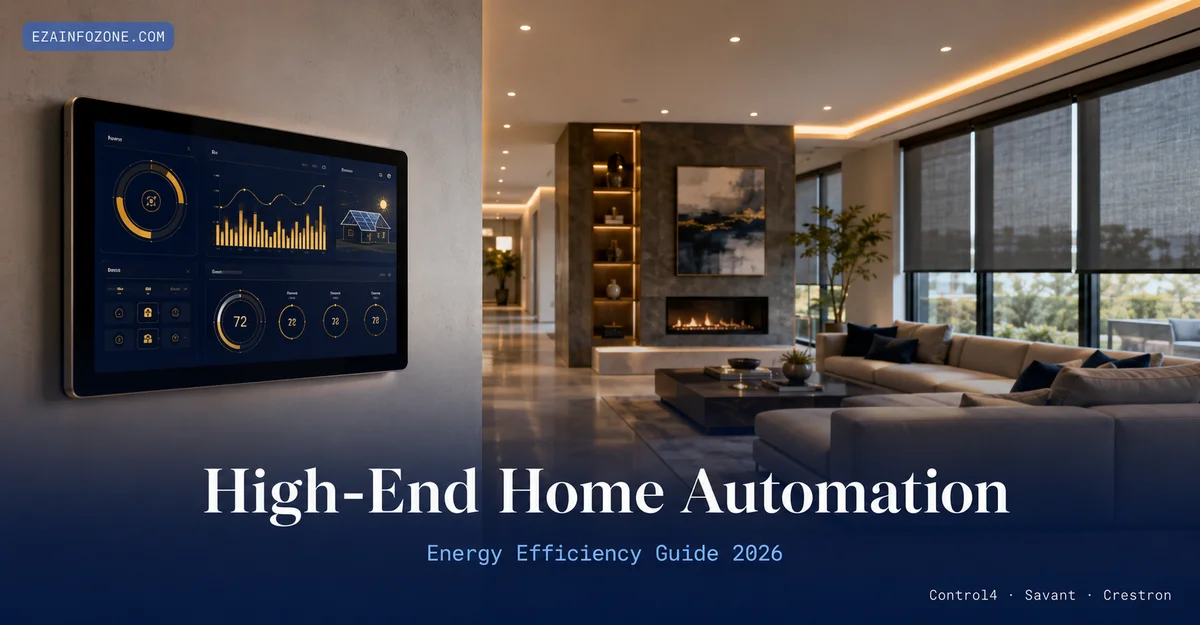
High-End Home Automation
for Energy Efficiency in 2026
Control4, Savant & Crestron compared — with real costs, verified savings data, and a step-by-step guide to building an energy-efficient smart home.
High end home automation systems like Control4, Savant, and Crestron reduce household energy use by 15–40% through AI-driven HVAC control, automated lighting, and smart energy management. A professionally installed system costs $15,000–$80,000 and can raise property value by 3–5% while delivering $1,200–$3,000 in annual energy savings.
What Is High End Home Automation?
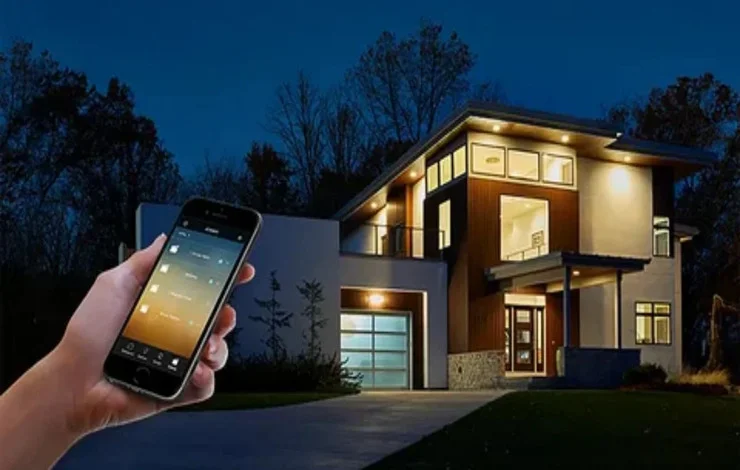
High end home automation is a whole-property integration system that unifies every controllable system in your home — lighting, HVAC, security, window shades, entertainment, and energy management — under a single intelligent platform. Unlike plug-and-play DIY setups, high-end systems are designed, programmed, and installed by certified professionals who customise the logic to your exact floor plan, lifestyle, and energy goals.
The three platforms that dominate the luxury market are Control4, Savant, and Crestron. Each uses proprietary processors, dedicated apps, and certified dealer networks. What sets them apart from consumer-grade alternatives like Google Home or Amazon Echo is deterministic control — commands execute reliably within milliseconds, scenes run exactly as programmed, and the system works even when the internet goes down.
For energy efficiency specifically, the real advantage of high end home automation is simultaneous coordination. A DIY thermostat saves energy on HVAC. A DIY smart bulb saves energy on lighting. But a professional system can save energy on HVAC, lighting, window shading, appliances, and EV charging all at once — adjusting each in real time based on occupancy, weather, grid pricing, and solar production. That coordinated intelligence is what achieves the 30–40% total energy reduction that individual devices cannot.
DIY smart devices save energy one device at a time. High-end automation platforms save energy systemically — every device responds to every other device, optimised by AI across your entire home simultaneously.
According to the U.S. Department of Energy, smart home technologies have the potential to reduce residential energy consumption by up to 40% when fully integrated. A standalone smart thermostat achieves 10–23% on HVAC alone. The gap between those numbers is exactly what high-end automation platforms are designed to capture.
If you are exploring the green tech home automation side of smart homes — solar, EV charging, and battery storage — high-end platforms like Savant Power offer the deepest integration of those systems with whole-home control.
Smart Home Energy Management: How It Works
Smart home energy management is the brain of an energy efficient smart home. It monitors every circuit in real time, tracks consumption by device or zone, shifts energy-intensive loads to cheaper off-peak hours, and coordinates solar generation with battery storage and grid draw — all automatically, without any action from the homeowner.
At the core of any professional energy management setup is the Energy Management System (EMS) — either a standalone unit like the Savant Power System or a software layer integrated into the main automation controller. The EMS constantly reads data from three sources: your smart meter (grid consumption), your solar inverter (generation), and individual circuit sensors (device-level usage). It cross-references this data with real-time utility pricing if your area supports Time-of-Use (TOU) tariffs, then shifts loads automatically to minimise your bill.
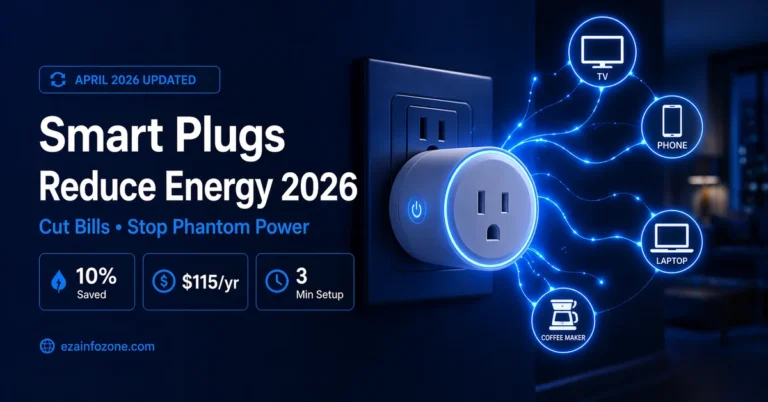
Your EV charger, dishwasher, pool pump, and HVAC system are all “shiftable” loads — they must run, but when they run is flexible. An AI-enabled EMS queues these loads to run during solar peak hours (11am–2pm) or off-peak grid hours (10pm–6am), then schedules them to finish before you need them. Result: the same tasks, at a fraction of the energy cost.
The five pillars of smart home energy management in 2026 are:
- Real-Time Monitoring — Circuit-level sensors track every watt consumed, identifying energy hogs and flagging abnormal usage (a fridge running 40% harder than normal could signal a failing compressor).
- Demand Response — The system automatically reduces non-critical loads during peak grid demand events, qualifying you for utility rebates of $100–$500/year in many states.
- Solar + Storage Coordination — Surplus solar energy charges batteries first, then powers EV charging, with any remaining excess sold back to the grid at the best available rate.
- Predictive Climate Control — AI thermostats learn your schedule and pre-condition rooms 30–45 minutes before occupancy, using the least energy for the most comfort.
- Occupancy-Based Automation — Motion sensors and door/window contacts ensure HVAC, lighting, and plugged-in devices never waste energy in unoccupied rooms or zones.
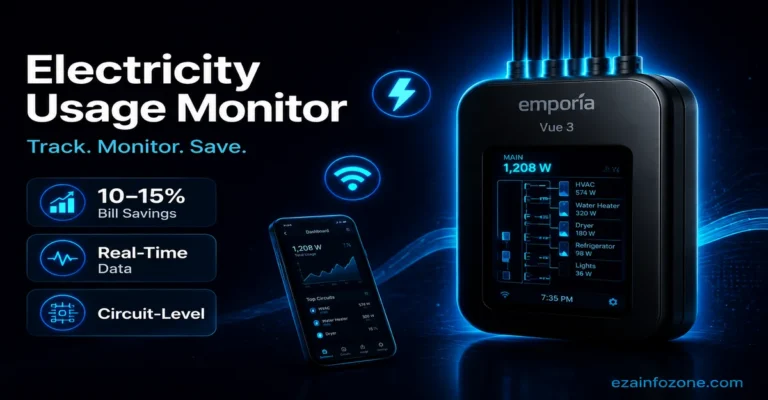
Savant Power, Control4 with its Energy Management module, and Crestron’s pyng hub all implement these five pillars natively. Third-party additions like the Sense Energy Monitor or Emporia Vue can add circuit-level visibility to any system that lacks built-in sensors.
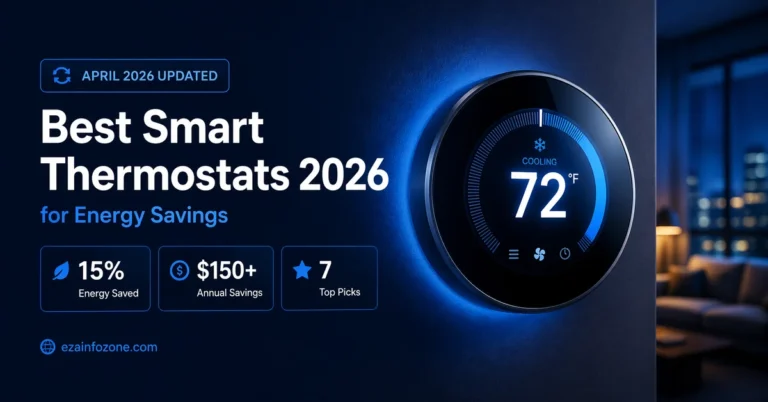
For a full breakdown of how smart thermostats specifically contribute to these savings, see our smart thermostat buying guide.
Sources: U.S. Dept of Energy — Smart Home Technologies | EPA — Smart Thermostat Savings Data | Savant Systems — Savant Power OverviewTop High-End Home Automation Platforms Compared
The three platforms below represent 80%+ of the professional luxury automation market. Each has distinct strengths, pricing tiers, and energy management capabilities. The right choice depends on your budget, preferred ecosystem, and how deeply you want to integrate solar and battery storage.
| Platform | Starting Cost | Full System Cost | Energy Mgmt | Solar Integration | App Quality | Best For |
|---|---|---|---|---|---|---|
| Control4 | $15,000 | $15K–$50K | Good | Via 3rd party | ★★★★ | Mid-luxury homes, flexibility |
| Savant | $25,000 | $25K–$80K | Excellent | Native (Savant Power) | ★★★★★ | Ultra-luxury, Apple users |
| Crestron | $30,000 | $30K–$100K+ | Good | Via integrations | ★★★ | Commercial-grade reliability |
Pros
- Most 3rd-party integrations
- Lowest entry cost
- Strong dealer network
- Reliable OS updates
Cons
- No native energy storage
- App less polished than Savant
- Requires certified dealer
Pros
- Native energy + solar storage
- Best-in-class Apple UI
- Premium hardware quality
- Strongest energy ROI
Cons
- Highest cost of three
- Fewer 3rd-party integrations
- Apple-centric ecosystem
Pros
- Commercial-grade reliability
- Unlimited customisation
- Best for large estates
Cons
- Highest programming costs
- Steeper learning curve
- Energy mgmt needs add-ons
All three platforms now support the Matter protocol, which means they can communicate with compatible third-party devices from Apple, Google, and Amazon ecosystems. This matters for energy management because it allows high-end controllers to coordinate with a wider range of smart plugs, sensors, and appliances without costly custom integrations.
Sources: Digitalholics — Control4 vs Savant vs Crestron 2026 | Savant Systems — Savant Power Spec Sheet | Crestron Electronics — Product DocumentationSmart Home Energy Efficiency: Devices That Deliver Real Savings
Building an energy efficient smart home at the luxury level goes beyond a smart thermostat and a few smart bulbs. The following device categories are the ones that deliver measurable savings when integrated with a high-end automation controller.
| Device Category | Best Option | Avg Cost | Energy Saving | Source |
|---|---|---|---|---|
| Smart Thermostat | Ecobee Smart Premium | $249 | 10–23% on HVAC | EPA |
| Motorised Shading | Lutron Sivoia QS | $800–$2,000/window | Up to 30% on cooling | DOE |
| Smart Lighting | Lutron RadioRA 3 | $120–$300/room | 30–60% on lighting | DOE |
| Electrochromic Glass | Halio Smart Glass | $80–$150/sq ft | Up to 30% on AC | Halio Inc. |
| Energy Monitor | Sense Energy Monitor | $349 | Identifies 10–15% waste | Sense Labs |
| Smart EV Charger | ChargePoint Home Flex | $699 | Charges at off-peak rates | ChargePoint |
| Battery Storage | Tesla Powerwall 3 | $9,200 installed | Reduces grid draw 60–80% | Tesla Energy |
Motorised shading is one of the most underrated energy efficiency tools in high-end automation. Lutron’s Sivoia QS system, which integrates directly into Control4, Savant, and Crestron, automatically adjusts blinds based on sun angle and room temperature. The U.S. Department of Energy estimates that smart automated shades can reduce cooling loads by up to 30% in south- and west-facing rooms — a significant saving in any climate.
Electrochromic smart glass (such as Halio) takes this further by tinting windows electronically when the sun’s angle reaches a threshold. No blinds, no manual adjustment — just glass that darkens at the right moment and clears when the sun has passed. At $80–$150 per square foot, it is a premium investment, but one that high-end automation controllers can fully automate based on real-time solar position data.
For a detailed breakdown of smart lighting options at every price point, see our smart lighting systems guide. For whole-home security integration with your automation platform, our smart home security guide covers how cameras, sensors, and access control connect to Control4 and Savant.
Sources: U.S. Dept of Energy — Building Technologies Office | EPA — ENERGY STAR Thermostat Data | Halio Inc. — Product Performance Data | Tesla Energy — Powerwall 3 Spec SheetSmart Home Automation Cost: What to Budget in 2026
Smart home automation cost varies more than almost any other home technology category. The range runs from a $500 basic pre-wire during construction to a $100,000+ whole-estate Crestron installation. Understanding where your project falls in that range requires breaking it into three components: hardware, installation/programming, and ongoing support.
| Budget Tier | System Type | Typical Cost | What’s Included | Annual Savings Est. |
|---|---|---|---|---|
| Entry | Pre-wire + basic control | $500–$1,500 | Infrastructure only, no active devices | — |
| Mid-Range | Control4 starter system | $3,500–$7,000 | Lighting, thermostat, basic AV control | $300–$600 |
| High-End | Control4 / Savant full home | $15,000–$50,000 | Full lighting, HVAC, security, AV, shading | $1,200–$2,500 |
| Ultra-Luxury | Savant / Crestron estate | $50,000–$100,000+ | Everything above + energy storage + solar | $2,500–$4,000+ |
The biggest cost variable after hardware is programming and commissioning. A certified Control4 dealer charges $85–$150/hour for programming, and a typical 4,000 sq ft home requires 40–80 hours of programming time. Savant and Crestron dealers charge $120–$200/hour with similar time requirements. This labour cost is one of the primary reasons high-end automation has a higher floor price than the hardware alone suggests.
Annual service and maintenance contracts run $1,500–$3,000/year and cover remote monitoring, software updates, and on-site support calls. Many dealers offer tiered plans — a remote-only plan at $800–$1,200/year is sufficient for stable systems, while active households benefit from the full contract.
Install during new construction (reduces wiring cost by 40–60%). Choose Control4 over Savant if Savant’s premium UI is not essential — savings of $8,000–$15,000 on a comparable scope. Bundle your solar installation with your automation dealer for package pricing on Savant Power.
For a complete breakdown of what individual components cost — from keypads to HVAC controllers — see our home automation cost breakdown guide.
Sources: Control4 Dealer Network Pricing 2026 | Savant Systems — Authorized Dealer Pricing Guide | HomeAdvisor — Home Automation Installation Cost ReportSmart Home Energy Monitor: See Every Watt in Real Time
A smart home energy monitor is the foundation of any serious energy management strategy. Without granular visibility into what is consuming power, and when, even the most sophisticated automation platform is making educated guesses. An energy monitor removes that uncertainty by tracking consumption at the circuit level or device level in real time.
High-end automation platforms like Savant Power include built-in energy monitoring as part of their hardware stack. For Control4 and Crestron systems that do not include native monitoring, three standalone options integrate seamlessly:
| Monitor | Price | Circuits Tracked | Control4 Compatible | Solar Support | Best Feature |
|---|---|---|---|---|---|
| Sense Energy Monitor | $349 | Main panel (device AI) | Yes | Yes | AI device identification |
| Emporia Vue 3 | $149.99 | Up to 16 circuits | Via API | Yes | Best value, per-circuit granularity |
| Savant Power Module | Included w/ system | Full panel + storage | Savant only | Native | Deepest automation integration |
The Sense Energy Monitor uses machine learning to identify individual devices from the noise of your main panel — without needing per-circuit sensors. After 2–4 weeks of learning, it can identify your refrigerator, HVAC, dryer, and EV charger individually. When integrated with Control4, it can trigger automation scenes — for example, automatically dimming non-essential lights when the dryer and HVAC are both running to reduce peak demand.
The Emporia Vue 3 ($149.99) offers the best value for circuit-level monitoring. Its 16 individual current transformers clip onto breaker wires inside your electrical panel, giving you per-circuit data within 1% accuracy. For homeowners who want to know exactly how much power the home office, master bedroom, or pool equipment are using — without the cost of a Savant system — Emporia Vue is the clear recommendation.
Once your monitoring is in place, the data feeds directly into your automation platform’s scheduling logic. A home that knows its pool pump runs 6 hours/day can shift that cycle to run during solar peak hours, saving $150–$400/year on that circuit alone.
Sources: Sense Labs — Sense Energy Monitor Product Data | Emporia Energy — Vue 3 Spec Sheet | Savant Systems — Power System DocumentationIs High End Home Automation Worth the Investment?
The honest answer is: it depends on what you are measuring. On energy savings alone, high-end home automation has a long payback period. A $25,000 Savant system saving $2,000/year in energy costs takes 12.5 years to break even on energy savings alone. But energy savings are only one dimension of the ROI equation.
The National Association of Realtors reports that luxury homes with professionally installed automation systems sell for 3–5% more than comparable non-automated homes. On a $600,000 home, that is $18,000–$30,000 in added resale value — often recovering the full installation cost at the point of sale. On a $1M home, the premium is $30,000–$50,000.
The second dimension is utility cost trajectory. Electricity rates in the U.S. have increased an average of 2.4% per year over the last decade, and with increasing grid strain from EV adoption, that trend is projected to continue. A system installed today at $25,000 that saves $2,000/year in 2026 will save $2,800/year by 2036 — significantly shortening the effective payback period over time.
| System Cost | Annual Energy Savings | Home Value Added | Combined ROI Period |
|---|---|---|---|
| $15,000 (Control4 mid) | $1,200–$1,800/yr | $12,000–$24,000 | 1–3 years (value) / 8–12 years (energy) |
| $25,000 (Savant entry) | $1,800–$2,800/yr | $18,000–$40,000 | Immediate–2 years (value) / 9–14 years (energy) |
| $50,000 (Savant/Crestron full) | $2,500–$4,000/yr | $30,000–$60,000 | Immediate (value) / 12–20 years (energy) |
The third dimension — often overlooked — is lifestyle value. High-end automation systems give you voice control, one-touch scenes, remote monitoring, and the comfort of knowing every door is locked, every light is off, and every device is running at peak efficiency when you are away. For the demographic that buys luxury homes, this convenience and peace of mind has genuine monetary value that is simply not captured in energy bill comparisons.
For homeowners who want the voice control and scene-setting benefits of luxury automation without the full investment, a phased approach works well: start with Control4’s entry-level system at $3,500–$7,000, then expand as budget allows.
- Buy during new construction — reduces installation cost by 40–60%
- Choose Control4 if budget is under $25K — best value-to-feature ratio
- Add Savant Power module if solar + battery storage is in your plan
- Install an energy monitor first — data guides every automation decision
- Negotiate a 3-year service contract upfront — typically saves 20–30% vs. annual renewals
- Apply for utility demand response rebates — qualifies for $100–$500/year in most states
❓ Frequently Asked Questions
Ready to Plan Your High-End Smart Home?
Explore our complete guides on costs, platforms, and energy-saving smart devices — everything you need to make the right decision for your home.
Browse All Home Automation Guides →