IoT Devices for Home 2026: Complete Guide to Smart IoT Devices
IoT Devices for Home 2026:
The Only Guide You Need
Complete IoT devices list — smart plugs, sensors, smart appliances, Matter & Zigbee explained simply. Real examples for every budget.
IoT devices for home are everyday objects connected to the internet — smart plugs, sensors, thermostats, locks, and robot vacuums — that you control remotely via smartphone or voice. In 2026, a basic smart home setup starts at $100–$200. The best first device is a smart plug (~$15), and Matter is the recommended protocol for new buyers.
1. What Are IoT Devices for Home?
IoT devices for home are everyday objects connected to the internet that you can monitor, control, and automate remotely from your smartphone or voice assistant. IoT stands for “Internet of Things” — meaning physical things that think, communicate, and act on their own.
Think about your regular light switch — it only does one thing. But a smart IoT device version of that switch can turn on automatically when you arrive home, dim at bedtime, turn off when you leave, and even save your electricity bill — all without you touching it once.
In 2026, there are over 16 billion active IoT connected devices worldwide. For homeowners, smart IoT devices mean more convenience, lower energy costs, and stronger home security — all managed from one app.
💡 Simple Definition
An IoT device for home = any physical object that connects to the internet, collects data through sensors, and can be controlled remotely without human intervention. Your smart lock, smart bulb, robot vacuum, and energy monitor are all IoT devices.
2. IoT Devices List — 6 Main Types for Home
Here is every major IoT device category for home — start with one type, then expand room by room.
Smart Plugs
Turn any appliance smart. Control via app. Monitor energy usage per device.
IoT Sensors
Motion, door, temperature, humidity, water leak. The eyes and ears of your home.
Smart Appliances
Wi-Fi connected fridges, washers, robot vacuums that automate daily tasks.
Energy Monitors
Track real-time electricity usage. Find power-hungry devices. Cut bills by 20–30%.
Smart Security
Video doorbells, smart locks, cameras. Monitor your home from anywhere.
Smart Hubs
Amazon Echo, Google Nest. The central brain connecting all IoT devices together.
3. IoT Devices Examples in Daily Life
Here are the most common IoT devices examples in daily life — things millions of homeowners already rely on in 2026.
| IoT Device Example | What It Does Daily | Average Cost |
|---|---|---|
| Smart Bulb | Turns on when you arrive, dims at bedtime | $10–$25 |
| Smart Plug | Schedules coffee maker, monitors energy | $12–$25 |
| Motion Sensor | Turns lights on when you enter a room | $15–$30 |
| Smart Thermostat | Learns schedule, heats home before you wake | $130–$250 |
| Video Doorbell | Shows who is at door on your phone | $100–$250 |
| Smart Lock | Auto-locks at night, lets guests in remotely | $150–$280 |
| Robot Vacuum | Cleans floors automatically on a schedule | $200–$700 |
| Energy Monitor | Tracks which appliances use most electricity | $120–$300 |
Start with smart plugs and a motion sensor — under $40 total. These two IoT devices examples alone will teach you more about home automation than reading 10 guides.
4. Smart Plugs — Best First IoT Device for Home
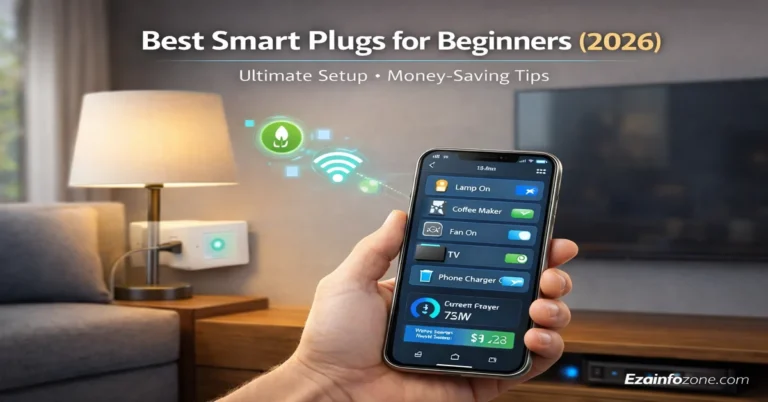
If you are completely new to smart IoT devices, a smart plug is the single best starting point. It plugs into your existing wall outlet, you plug your appliance into it, and that appliance immediately becomes a connected IoT device — no rewiring, no electrician, no complicated setup required.
Smart plugs let you turn devices on or off remotely, set automatic schedules, and monitor exactly how much electricity each appliance consumes every month. Many homeowners are shocked when they first see how much their TV, gaming console, or washing machine costs per month.
| Smart Plug | Protocol | Price | Best For |
|---|---|---|---|
| TP-Link Kasa EP25 | Matter | ~$17 | Best Overall 2026 |
| Amazon Smart Plug | Wi-Fi | ~$15 | Alexa Users |
| Eve Energy | Matter | ~$35 | Apple HomeKit |
| Sonoff S40 | Wi-Fi | ~$12 | Budget Pick |
5. IoT Sensors for Home — Motion, Door, Temperature & More
IoT sensors are the intelligence layer of your smart home. They detect what is happening — movement, open doors, temperature changes, water leaks — and automatically trigger other smart IoT devices in response. No manual commands needed.
A motion sensor near your front door can turn on the porch lights when someone approaches at night. A door sensor alerts your phone the moment a child gets home from school. A water leak sensor under your sink can save you thousands in water damage costs by catching a leak immediately.
Motion Sensor
Detects movement. Auto-triggers lights, alarms, and cameras instantly.
Door/Window Sensor
Phone alert when doors or windows open. Perfect for child safety and security.
Temperature Sensor
Monitors room temperature. Triggers thermostat for perfect comfort automatically.
Water Leak Sensor
Detects leaks near washing machines and sinks. Prevents costly water damage.
Always buy sensors using the same protocol as your hub — Matter, Zigbee, or Z-Wave. Mixed protocols cannot communicate with each other and will not work as a system.
6. Smart IoT Appliances — Your Whole Home Connected
Smart IoT appliances are your everyday household items — refrigerators, washing machines, ovens, robot vacuums, air conditioners — rebuilt with Wi-Fi connectivity and intelligent software. In 2026, these go far beyond simple remote control.
A smart refrigerator tracks expiry dates and suggests recipes. A smart washing machine automatically runs during off-peak electricity hours to save money. A robot vacuum knows your schedule and cleans while you are at work — all without a single command from you.
| Smart Appliance | Top Pick 2026 | Key IoT Feature | Price From |
|---|---|---|---|
| Robot Vacuum | Roborock S8 Pro | AI obstacle avoidance | ~$500 |
| Smart Thermostat | Google Nest Learning | Learns your daily schedule | ~$130 |
| Smart Refrigerator | Samsung Family Hub | Internal camera + food tracking | ~$2,000 |
| Smart Washer | LG ThinQ Series | Remote monitoring + energy saving | ~$800 |
| Smart Air Purifier | Dyson Purifier | Auto air quality response | ~$500 |
7. Matter vs Zigbee — Which IoT Protocol in 2026?
One of the most confusing parts of buying IoT devices for home is understanding protocols — the wireless “language” devices use to communicate. In 2026, the two most important protocols are Matter and Zigbee. Choosing correctly saves you from buying incompatible devices.
Matter — Best Choice for New Buyers
Matter is the newest universal smart home standard, backed by Amazon, Apple, Google, and Samsung together. Any device with Matter certification works with ALL major platforms simultaneously — Alexa, Google Home, and Apple HomeKit. No compatibility worries, no separate hub required for most devices.
Zigbee — Still Excellent for Budget Setups
Zigbee is older but extremely reliable, energy efficient, and has the largest ecosystem of affordable IoT devices. It creates a self-extending mesh network where each Zigbee device also acts as a signal repeater — making it ideal for larger homes. The main requirement is a compatible hub like Amazon Echo Plus or Philips Hue Bridge.
| Feature | Matter | Zigbee |
|---|---|---|
| Works With All Platforms | Yes — No Hub Needed | Hub Required |
| Device Price | Slightly Higher | Very Affordable |
| Mesh Networking | Via Thread | Built-In ✅ |
| Setup Ease | Very Easy | Moderate |
| Best For | New buyers 2026 | Budget + existing setups |
Starting fresh in 2026? Choose Matter devices — zero compatibility headaches. Already have Zigbee devices from brands like Philips Hue or IKEA? Zigbee still works perfectly and saves you money.
8. Energy Monitoring IoT Devices — Cut Your Bills Every Month
Energy monitoring is the most underrated category in the entire IoT devices list. These smart IoT devices track exactly how much electricity each appliance in your home consumes in real time — and give you the data to significantly reduce your monthly bills.
Smart thermostats alone save 10–15% on heating and cooling bills every year. Add smart plugs with energy monitoring across key appliances, and many homeowners report cutting total electricity bills by 20–30% within their first year of using IoT devices for home.
Sense Home Monitor
Whole-home energy monitor. Installs in electrical panel. Tracks every device automatically.
Google Nest Thermostat
Learns your schedule. Saves 10–15% on HVAC bills. Pays for itself in under 2 years.
TP-Link Kasa EP25
Per-outlet energy monitoring. See exactly what each appliance costs per month.
Emporia Vue 3
16-circuit whole-home monitor. Real-time usage per circuit. Best data accuracy.
🛠️ Free Smart Home Planning Tools
Plan, compare and calculate your IoT devices setup before spending a single dollar.
9. How to Get Started with IoT Devices for Home
Follow these five steps to set up your first IoT devices for home — in the right order, without wasting money.
Choose Your Smart Home Ecosystem First
Pick between Amazon Alexa, Google Home, or Apple HomeKit. Alexa works best for most people — widest device support, most affordable options, easiest setup. iPhone users who prioritize privacy should consider HomeKit.
Get a Smart Hub
Buy an Amazon Echo 4th Gen (~$99) or Google Nest Hub. This becomes the brain that all your IoT devices connect to. Without a hub, your devices work independently — with a hub, they work as a complete intelligent system.
Add a Smart Plug as Your First IoT Device
A smart plug (~$15) is the safest, cheapest, zero-risk first IoT device for home. No installation needed. Instant results. You will immediately understand how remote control and automation actually works in practice.
Expand Room by Room
Never try to automate your whole home at once — it leads to confusion and wasted spending. Pick one room, set it up completely, learn from it, then move to the next room. Living room or bedroom is the best starting point.
Create Automations — This Is the Real Magic
Set up routines: “Good Morning” that turns on lights and starts coffee at 7am. “Leaving Home” that turns everything off when you go. “Bedtime” that locks doors and dims lights automatically. This is where smart IoT devices show their real value.