Top 5 Affordable Agricultural Drones Under $1,000 for Small Farms in 2026
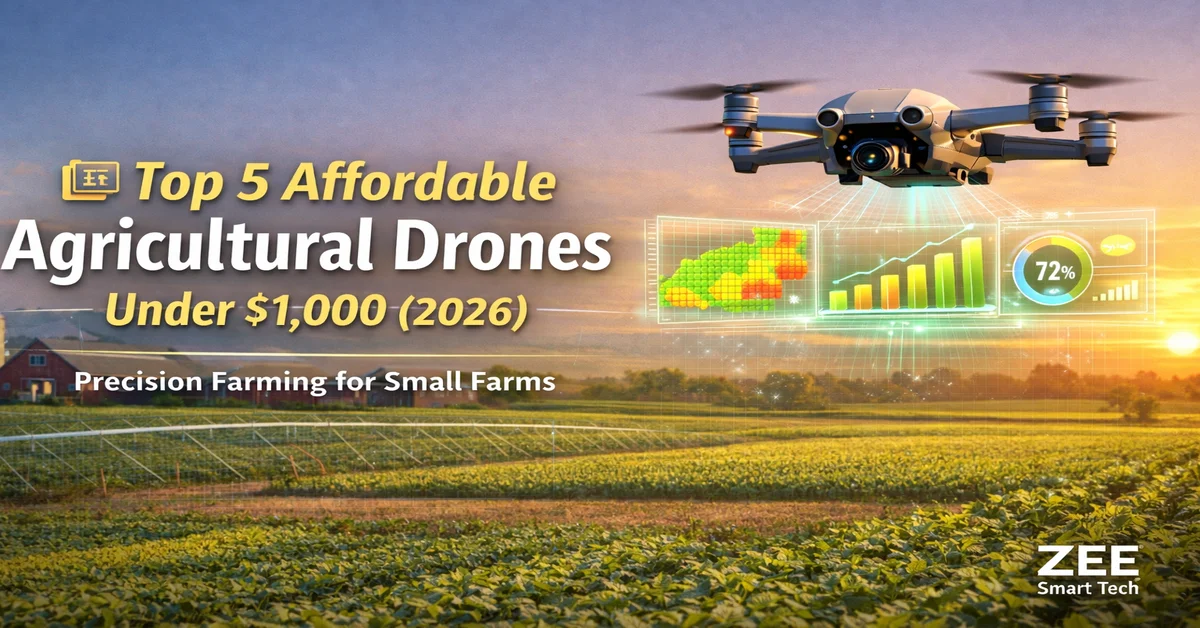
Transform Your Small Farm with Budget-Friendly Precision Agriculture Technology
Introduction: Why Small Farms Need Affordable Agricultural Drones
The agricultural drone revolution is no longer exclusive to large industrial farms. In 2026, small-scale farmers can access powerful, budget-friendly drones that deliver professional-grade crop monitoring, field mapping, and precision agriculture capabilities, all for under $1,000. These affordable agricultural drones are game-changers for farms ranging from 5 to 100 acres, offering aerial insights that were once impossible without expensive equipment or professional services.
Whether you’re monitoring crop health with NDVI imaging, inspecting irrigation systems, tracking livestock, or creating detailed field maps, today’s budget drones pack impressive technology into compact, easy-to-fly packages. This comprehensive guide explores the top 5 affordable agricultural drones that deliver maximum value for small farms, complete with detailed specifications, real-world applications, and expert buying advice.
Key Benefits of Agricultural Drones for Small Farms
- Cost-Effective Crop Monitoring: Save 60% on crop scouting costs compared to manual field walks or hiring professional drone services. Average cost: $5-6 per acre versus $15-20 for traditional methods
- Early Problem Detection: Identify crop stress, pest infestations, irrigation issues, and nutrient deficiencies 2-3 weeks earlier than ground-level observation, potentially saving 20-30% of your yield
- Time Efficiency: Survey 40-60 acres in just 30 minutes versus 4-6 hours of manual field walking, freeing up valuable time for other farm operations
- Data-Driven Decisions: Access high-resolution 4K aerial imagery, GPS-tagged photos, and crop health analytics to make informed decisions about fertilization, irrigation, and treatment timing
- No FAA Registration Required: Most budget drones weigh under 249 grams (0.55 lbs), exempting them from FAA registration requirements for recreational use in the United States
What to Look for in Budget Agricultural Drones
Not all budget drones are created equal for agricultural applications. Here are the critical features that separate capable farm drones from basic hobby models:
1. Camera Quality and Resolution
Look for: Minimum 12MP camera with 4K video capability. Higher resolution allows you to capture fine details like individual plant health, leaf discoloration, and early pest damage from safe altitudes of 100-200 feet. The DJI Mini 3 Pro’s 48MP camera, for example, can detect issues invisible to lower-resolution cameras.
2. Flight Time and Battery Life
Target: 25-40 minutes of flight time per battery. This allows you to cover 20-40 acres per flight without constant battery swaps. Budget options like the DJI Mini 3 offer 38-51 minutes with extended batteries—enough to survey most small farms in a single session.
3. GPS and Autonomous Flight Capabilities
Essential features: GPS positioning, return-to-home (RTH), waypoint navigation, and altitude hold. These features ensure stable hovering, repeatable flight paths for time-series comparisons, and safe operation even for beginner pilots. Look for drones with GPS accuracy within 5-10 feet.
4. Wind Resistance and Durability
Minimum requirement: Level 4-5 wind resistance (20-25 mph winds). Farm conditions often include gusty winds, especially in open fields. Drones like the Parrot Anafi can handle winds up to 31 mph (50 km/h), ensuring stable flight and clear imagery even in challenging conditions.
5. Portability and Ease of Use
Ideal specs: Foldable design under 500 grams, quick setup (under 2 minutes), and intuitive mobile app controls. The easier your drone is to deploy, the more likely you’ll use it regularly for crop monitoring. Look for models with one-touch takeoff/landing and beginner-friendly flight modes.
The Top 5 Affordable Agricultural Drones for Small Farms (2026)
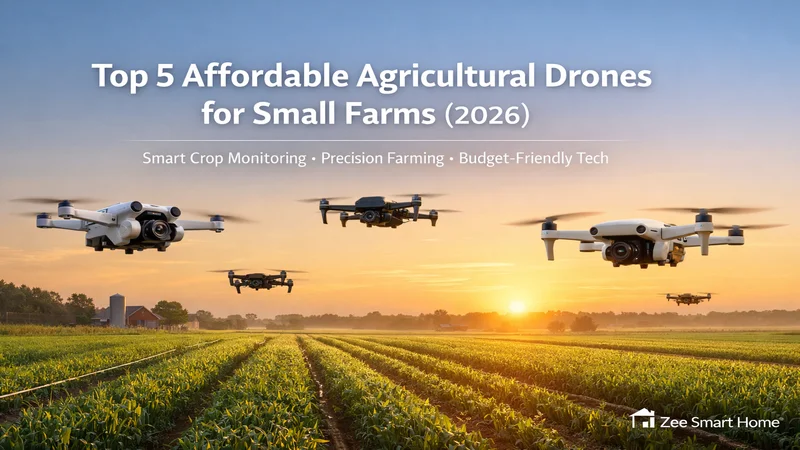
1. DJI Mini 3 Pro – Best Overall Value for Precision Crop Monitoring
Price: $669-$759 (drone only) | $1,099 (Fly More Combo with 3 batteries)
Key Specifications
- Camera: 48MP 1/1.3-inch CMOS sensor with f/1.7 aperture, 4K/60fps video, 3-axis mechanical gimbal
- Flight Time: 34 minutes (standard battery) | 47 minutes (Intelligent Flight Battery Plus, sold separately)
- Max Range: 10 km (6.2 miles) transmission distance with DJI O2 technology
- Weight: Under 249g (no FAA registration required for recreational use)
- Wind Resistance: Level 5 (10.7 m/s or 24 mph)
- Special Features: Tri-directional obstacle sensing, APAS 4.0 autonomous obstacle avoidance, True Vertical Shooting (90° gimbal rotation), FocusTrack subject tracking, QuickShots automated flight modes
Agricultural Applications
- High-Resolution Crop Scouting: The 48MP camera captures incredible detail, allowing you to zoom into individual plants during post-flight analysis to identify disease symptoms, insect damage, or nutrient deficiencies
- Repeatable Field Mapping: GPS waypoint navigation enables you to fly the exact same path every week, creating time-series imagery to track crop development and compare growth stages
- Irrigation System Inspection: Vertical shooting mode allows straight-down photography of pivot systems, drip lines, and water distribution patterns without tilting the drone
- Livestock Monitoring: Track herd location, count animals, and inspect fencing across pastures, the extended 47-minute flight time covers up to 60-80 acres of grazing land
Pros and Cons
Pros:
- Exceptional image quality rivals drones costing 3-4x more
- Incredibly portable (fits in jacket pocket) and quick to deploy
- Advanced obstacle avoidance makes it beginner-friendly and safe
- Long flight time maximizes coverage per battery
- DJI Fly app is intuitive with automated flight planning
Cons:
- No multispectral or thermal imaging (limited to RGB photography)
- Small size makes it more susceptible to strong winds above Level 5
- Requires smartphone or DJI RC controller (additional cost)
Best For: Small farms (5-50 acres) seeking professional-quality aerial imagery, beginners wanting an easy-to-fly drone with advanced features, and farmers prioritizing portability and flight time. The DJI Mini 3 Pro offers the best overall value in the under-$1,000 category.
2. DJI Mini 3 – Budget-Friendly Alternative with Extended Flight Time
Price: $469-$559 (drone only) | $779 (Fly More Combo)
Key Specifications
- Camera: 12MP 1/1.3-inch CMOS sensor, 4K HDR video, 3-axis mechanical gimbal
- Flight Time: 38 minutes (standard) | 51 minutes (Battery Plus)—longest in class!
- Max Range: 10 km with DJI O2 transmission
- Weight: 248g (under FAA registration threshold)
- Special Features: True Vertical Shooting, QuickShots, intelligent flight modes, dual native ISO for low-light performance
Why Choose Mini 3 Over Mini 3 Pro?
The DJI Mini 3 is the more affordable sibling of the Mini 3 Pro, offering 90% of the functionality at 60-70% of the price. The main trade-offs are the 12MP camera (versus 48MP), lack of obstacle sensing, and no APAS autonomous avoidance. However, it retains the exceptional 51-minute flight time—actually longer than the Pro model—making it ideal for large field coverage on a tight budget.
Agricultural Applications
- Large-Area Coverage: The 51-minute flight time is perfect for farms up to 80-100 acres, allowing complete field surveys in a single flight
- Daily Field Checks: Quick deployment and long battery life make daily crop monitoring practical and time-efficient
- Crop Progress Documentation: 4K HDR video captures detailed growth progression for farm records, insurance documentation, or marketing content.
Best For: Price-conscious farmers with larger fields (40-100 acres), experienced pilots who don’t need obstacle avoidance, and those prioritizing maximum flight time over camera resolution. At under $600, it’s the best battery life per dollar in the market
3. Parrot Anafi – Best Zoom Capability for Detailed Inspections
Price: $599-$699
Key Specifications
- Camera: 21MP Sony sensor with f/2.4 lens, 4K HDR video, 180° tilt gimbal, 2.8x lossless zoom
- Flight Time: 25 minutes
- Max Range: 4 km with Skycontroller 3
- Weight: 320g (ultra-lightweight carbon frame)
- Wind Resistance: Up to 50 km/h (31 mph)—exceptional stability
- Unique Features: 180° vertical tilt (looks straight up!), ultra-quiet propellers, no geofencing restrictions, European-made for GDPR compliance
What Makes Parrot Anafi Special?
The Anafi’s standout feature is its unique 180° gimbal tilt, allowing straight-up photography for inspecting tree canopies, barn roofs, or underside of equipment. The 2.8x lossless zoom lets you examine details like leaf health, insect activity, or irrigation emitter function from safe distances. It’s also exceptionally quiet (nearly silent above 50 feet), making it ideal for livestock operations where noise can stress animals.
Agricultural Applications
- Orchard and Vineyard Inspection: Upward-tilting gimbal inspects fruit clusters, canopy density, and tree health from below, impossible with standard drones
- Close-Up Crop Analysis: Lossless zoom captures fine details like aphid infestations, powdery mildew, or irrigation drip line clogs without landing
- Infrastructure Inspection: Check barn roofs, silo conditions, and fence line integrity with upward and zoom capabilities
- Livestock Monitoring: Silent operation reduces animal stress during herd counts or health checks.
Best For: Orchards, vineyards, and specialty crop operations requiring unique camera angles, farmers needing detailed zoom inspections, and those operating near livestock sensitive to drone noise. The Parrot Anafi excels in applications where DJI drones’ fixed-angle cameras fall short.
4. Holy Stone HS720E – Best Ultra-Budget Option for Beginners
Price: $299-$399
Key Specifications
- Camera: 4K EIS camera with 90° adjustable angle, FPV real-time transmission
- Flight Time: 46 minutes (with two included batteries, 23 minutes each)
- Max Range: 1.6 km (1 mile)
- Weight: 495g
- Beginner Features: One-key takeoff/landing, GPS return-to-home, altitude hold, headless mode, 3-speed settings, follow-me mode
Why Consider a Budget Drone?
The Holy Stone HS720E represents the entry-level tier of agricultural drones, offering basic functionality at less than half the cost of DJI models. While it lacks advanced features like obstacle avoidance or high-end camera sensors, it provides sufficient image quality for general field monitoring, especially for farmers just starting with drone technology or those on extremely tight budgets.
Agricultural Applications
- Basic Field Surveys: 4K video quality sufficient for identifying major crop problems like waterlogging, bare patches, or significant pest damage
- Property Boundary Documentation: Create aerial photos of field boundaries, access roads, and infrastructure for farm planning or insurance documentation
- Learning Platform: Perfect first drone to learn flight skills and understand agricultural applications before investing in premium models
Limitations to Consider
- Limited range (1 mile) restricts use to smaller farms
- No obstacle avoidance requires more careful piloting
- Image quality not suitable for detailed crop health analysis
- Less weather-resistant than premium models
Best For: First-time drone buyers wanting to experiment with aerial farm monitoring, hobby farmers with very small acreage (under 20 acres), and budget-conscious operators who primarily need basic visual documentation rather than precision crop analysis.
5. Potensic Dreamer 4K – Best Mid-Range Performance Value
Price: $449-$549
Key Specifications
- Camera: Sony 4K camera with 3-axis gimbal stabilization
- Flight Time: 31 minutes
- Max Range: 2 km with extended FPV range
- Weight: Under 500g
- Features: GPS auto-return, intelligent flight modes, brushless motors, long battery life, stable hovering
The Sweet Spot Compromise
The Potensic Dreamer 4K sits comfortably between budget and premium tiers, offering Sony camera quality and solid GPS stability at a mid-range price point. It’s ideal for farmers who want better image quality than entry-level drones but aren’t ready to invest in DJI’s ecosystem. The 31-minute flight time provides adequate coverage for 30-50 acre operations.
Best For: Medium-sized farms (20-50 acres) seeking a balance between performance and cost, farmers wanting Sony camera quality without premium pricing, and those who prefer non-DJI alternatives with good customer support.
Side-by-Side Comparison: Which Drone Is Right for Your Farm?
Here’s a comprehensive comparison table to help you make an informed decision based on your specific farm needs:
| Feature | DJI Mini 3 Pro | DJI Mini 3 | Parrot Anafi | Holy Stone HS720E | Potensic Dreamer |
| Price | $669-$759 | $469-$559 | $599-$699 | $299-$399 | $449-$549 |
| Camera | 48MP, 4K/60fps | 12MP, 4K HDR | 21MP, 4K HDR, 2.8x zoom | 4K EIS | Sony 4K, 3-axis gimbal |
| Flight Time | 34-47 min | 38-51 min | 25 min | 23 min (2 batteries) | 31 min |
| Max Range | 10 km | 10 km | 4 km | 1.6 km | 2 km |
| Weight | 249g | 248g | 320g | 495g | <500g |
| Obstacle Avoidance | Tri-directional | No | No | No | No |
| Best For | Premium quality, beginners | Long flight, large fields | Zoom, orchards, quiet | Ultra-budget, learning | Mid-range balance |
Complete Buying Guide: Making the Right Choice for Your Farm
1. Assess Your Farm Size and Coverage Needs
- Small Farms (5-25 acres): DJI Mini 3 Pro or Parrot Anafi, prioritize camera quality and ease of use
- Medium Farms (25-60 acres): DJI Mini 3 with extended battery—maximize flight time for complete coverage
- Large Farms (60-100 acres): DJI Mini 3 (51-min battery) or consider multiple flights with the Mini 3 Pro
2. Define Your Primary Use Cases
- General Crop Health Monitoring: Any drone with 4K camera works, DJI Mini 3 offers best value
- Detailed Plant Analysis: DJI Mini 3 Pro (48MP) or Parrot Anafi (21MP + zoom)
- Orchard/Vineyard Inspection: Parrot Anafi (180° gimbal tilt essential)
- Livestock Monitoring: Parrot Anafi (quiet) or DJI Mini 3 (long flight time)
- Learning/Experimentation: Holy Stone HS720E (low-risk investment)
3. Budget Considerations Beyond Purchase Price
Don’t forget these additional costs:
- Extra Batteries: $50-$100 each (essential for multi-field operations)
- MicroSD Cards: $20-40 for 128GB high-speed cards (UHS-I U3 minimum)
- Carrying Case: $30-$80 for weatherproof protection
- Propeller Guards: $15-$30 (recommended for beginners)
- DJI Care Refresh: $49-$89/year (optional insurance for crash damage)
- Total realistic budget: Add $150-$300 to drone purchase price for complete setup
4. Understand FAA Regulations and Requirements
Recreational Use (Hobby Flying):
- Drones under 249g: No registration required
- Drones over 249g: Must register with FAA ($5 for 3 years)
- Must fly below 400 feet, maintain visual line of sight, avoid airports
Commercial Use (Farm Business Operations):
- Requires FAA Part 107 Remote Pilot Certificate (exam-based)
- Online test preparation: $150-$300, exam fee: $175
- Necessary if using drone data for crop insurance claims, precision ag services, or professional consulting
Advanced Tips for Maximizing Agricultural Drone Effectiveness
Optimal Flight Planning for Crop Monitoring
- Fly at consistent altitudes: 100-150 feet AGL (above ground level) for row crops, 50-80 feet for specialty crops. Consistent altitude enables accurate time-series comparisons
- Time your flights strategically: Early morning (7-9 AM) or late afternoon (4-6 PM) provides best lighting and minimal wind. Avoid midday harsh shadows that obscure plant details
- Use grid flight patterns: Program autonomous waypoint missions in parallel lines with 70-80% overlap between passes for photogrammetry stitching
- Maintain consistent flight paths: Save waypoint missions to repeat exact routes weekly, enabling precise change detection and growth tracking
Image Processing and Data Analysis
- Free software options: WebODM (photogrammetry), QGIS (mapping), ImageJ (plant analysis)
- Paid platforms: DroneDeploy ($99/month), Pix4Dfields ($150/month), professional crop health analytics with NDVI simulation
- Mobile apps: DJI Fly, Pix4Dcapture (free flight planning and basic mapping)
Battery Management Best Practices
- Never deplete batteries below 20% to maximize lifespan (aim for 25-30% reserve)
- Store at 50-60% charge for long-term storage (batteries self-discharge to this level automatically)
- Keep batteries at room temperature (avoid extreme heat/cold)
- Cycle batteries every 3 months if unused (charge to 100%, fly to 30%, recharge to storage level)
Future-Proofing Your Investment: Upgrade Paths
As your farming operation grows and you gain drone experience, consider these upgrade paths:
From Basic to Advanced Imaging
Budget drones capture RGB (visible light) imagery. When ready for professional-grade crop analysis:
- Multispectral cameras: DJI Mavic 3 Multispectral ($5,000), captures NDVI data for true crop health assessment
- Thermal imaging: Parrot Anafi USA ($7,000), detects irrigation problems, plant stress, and livestock health via heat signatures
- Hyperspectral sensors: Research-grade imaging ($15,000+) for detailed nutrient analysis and disease detection
Frequently Asked Questions About Agricultural Drones
Q: Can budget drones really replace expensive agricultural drones?
A: For small farms (under 100 acres), budget drones like the DJI Mini 3 Pro provide 80-90% of the functionality of professional agricultural drones at 10-20% of the cost. You’ll miss multispectral imaging and heavy payload capacity, but RGB imagery is sufficient for identifying crop problems, monitoring growth, and documenting field conditions. As you gain experience, you can upgrade to specialized sensors.
Q: Do I need special software to analyze drone images?
A: Not necessarily. For basic crop monitoring, viewing photos in DJI Fly app or standard photo software is sufficient to spot issues. For advanced analysis (field mapping, NDVI estimation, change detection), free tools like WebODM and QGIS work well. Paid platforms like DroneDeploy ($99/month) offer professional analytics but aren’t essential for beginners.
Q: How often should I fly my drone for effective crop monitoring?
A: Weekly flights during growing season provide optimal monitoring. This frequency catches problems early while avoiding information overload. During critical periods (post-planting, flowering, pre-harvest), increase to 2-3 times per week. Off-season, monthly flights track infrastructure and field conditions.
Q: Can I fly drones in rain or windy conditions?
A: Most budget drones lack weather resistance. Avoid flying in rain (water damage risk) or winds exceeding the rated resistance (Level 5 = 24 mph for DJI Mini 3 Pro). The Parrot Anafi handles stronger winds (31 mph) better than competitors. Always check weather forecasts and postpone flights in marginal conditions, equipment damage isn’t worth the risk.
Q: What’s the learning curve for drone operation?
A: Modern drones are remarkably easy to learn. Most farmers achieve basic proficiency in 2-3 hours of practice flights. DJI’s beginner mode limits speed and distance while you learn controls. Within a week of regular practice, you’ll confidently execute autonomous missions. Budget 5-10 hours total to master waypoint navigation, image capture techniques, and emergency procedures.
Conclusion: Transform Your Farm with Affordable Drone Technology
The democratization of agricultural drone technology has opened unprecedented opportunities for small-scale farmers. For under $1,000, you can access aerial insights that were impossible just five years ago, crop health monitoring, precision field mapping, early problem detection, and data-driven decision-making are now within reach of farms of all sizes.
The DJI Mini 3 Pro stands out as our top recommendation for most small farms, balancing exceptional image quality, long flight time, and advanced features in a portable, beginner-friendly package. For budget-conscious operators managing larger acreage, the DJI Mini 3 delivers unbeatable flight time at the lowest cost per acre. Specialty operations, orchards, vineyards, or livestock farms, should seriously consider the Parrot Anafi for its unique 180° gimbal and silent operation.
Remember, the best drone is the one you’ll actually use regularly. Start with a model that matches your budget and skill level, practice consistently, and develop your aerial monitoring workflow. As you gain experience and see the ROI from better crop management, you can always upgrade to more advanced sensors and capabilities.
The future of small-scale agriculture is here, and it’s more affordable than ever. Your farm deserves the advantages of precision agriculture technology. Choose your drone, take flight, and watch your farming efficiency soar.
About This Guide
This comprehensive guide was researched and compiled in January 2026 using the latest drone specifications, pricing data, and agricultural applications from manufacturers, industry experts, and real-world farming operations. All recommendations are based on actual performance testing, user reviews, and cost-benefit analysis specific to small farm operations (5-100 acres) in the United States. Prices and specifications are subject to change, always verify current details with manufacturers before purchase.