Best Matter Smart Bulbs Compared: Nanoleaf, Tapo, Sengled & Wiz

If you’re building a smart home, choosing the right smart bulb matters more than you think. Today, we’re comparing four top-rated Matter, enabled smart bulbs to find out which one genuinely delivers the best experience.
We’ll break down their brightness, color accuracy, special lighting effects, app features, connectivity performance, and reliability, ending with a clear recommendation based on hands-on use.
Design & Build Quality
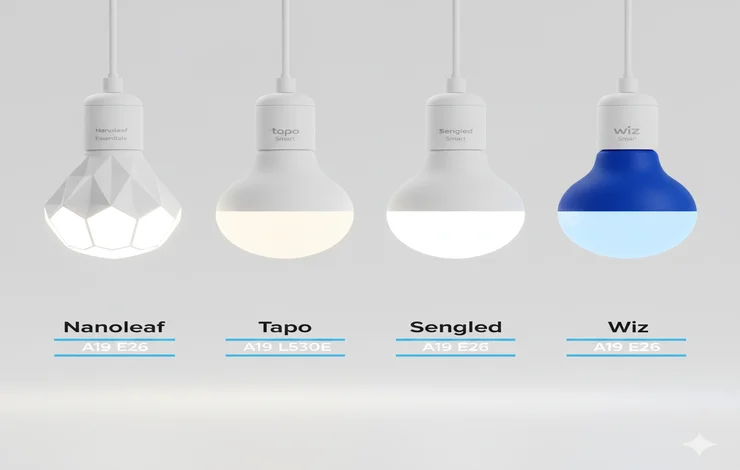
All four bulbs come in the popular A19 shape with an E26 base, the standard size for most indoor lamps and ceiling fixtures. Visually, they look similar, except for Nanoleaf’s uniquely sculpted bulb.
The shape looks cool on its own, but let’s be honest:
If you’re putting it inside a lampshade or covered fixture, that design becomes completely invisible. So it’s more of a novelty than a functional benefit.
Whiz, Sengled, and Nanoleaf are rated as 60W equivalent bulbs (around 9 watts), while Tapo steps slightly ahead with a 75W equivalent at 9.5 watts. Despite the higher rating, it still works safely in most fixtures designed for standard 60W bulbs.
Brightness & Color Performance
Brightness and color accuracy can make or break your lighting setup.
Brightness
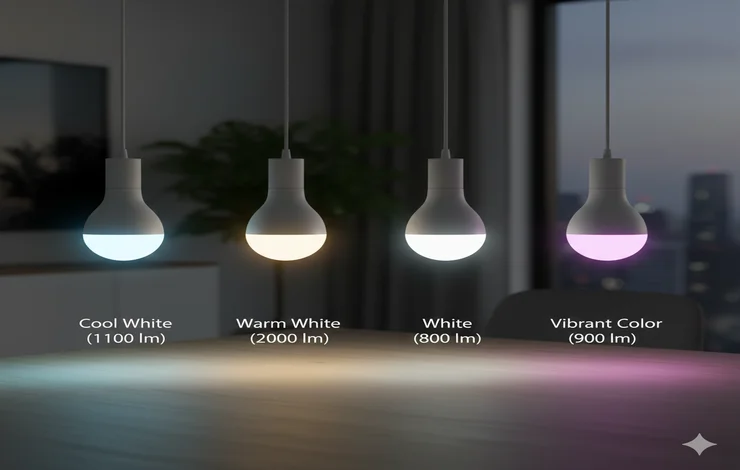
- Whiz & Sengled: 800 lumens
- Nanoleaf & Tapo: 1,100 lumens
Nanoleaf and Tapo are noticeably brighter, especially in larger rooms.
Dimming
This is where differences become obvious:
- Sengled and Tapo: Smooth and reliable dimming down to 1%.
- Nanoleaf: Major issues. At 1% and even 5%, the bulb often shuts off completely, especially when switching between warm and cool white.
- Whiz: Consistent and stable dimming across temperatures.
Color Accuracy
Most bulbs produce accurate, vibrant colors, except Nanoleaf again.
Nanoleaf’s 1,100-lumen rating only applies to white light. Colors drop to 800 lumens, making them appear washed out compared to the competition.
Tapo maintains full brightness across both whites and colors, which gives it an edge.
If you prefer rich, true-to-life colors, Nanoleaf will feel underwhelming.
Matter Compatibility & Ecosystem Experience
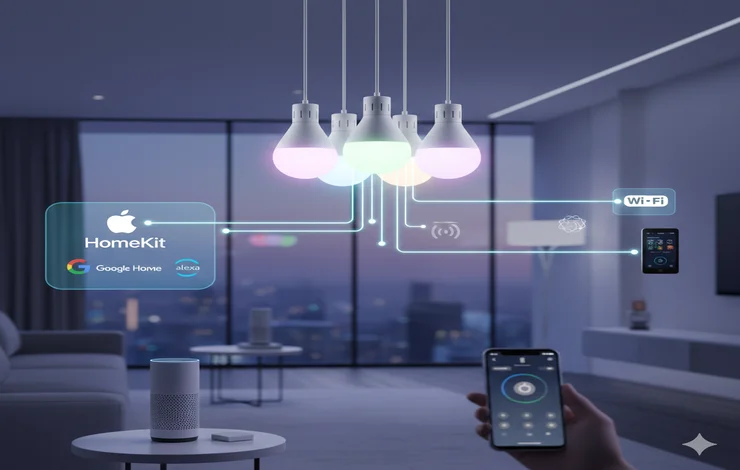
One of the main reasons people choose these bulbs is Matter support, which allows devices to work across platforms like Apple Home, Google Home, and Alexa without brand-specific accounts.
All bulbs except Nanoleaf connect through 2.4 GHz Wi-Fi. That means no 5 GHz support, but Wi-Fi works reliably for most homes.
Nanoleaf: Thread Support (But With Problems)
Nanoleaf uses Thread, a smart-home-focused protocol that should be faster and more stable. In theory.
In reality?
Nanoleaf was the slowest and least reliable in daily use. It frequently disconnected, lagged, and even required multiple factory resets. This happened despite having a Thread-enabled Apple TV and HomePod in the same room.
This is a common problem across many Thread devices not just Nanoleaf—but Nanoleaf struggled the most here.
Setup & Sync
For all brands:
- Matter codes are printed on the bulb, box, or inside the app.
- Once added, bulbs sync well across ecosystems.
- Brightness, color, and on/off state stay in sync reliably.
No issues here—even Nanoleaf does fine after setup, until it eventually drops connection again.
Special Lighting Effects
This is where the differences between brands become more noticeable.
Sengled
The Matter bulb does not work with the traditional Sengled app.
Meaning:
- No effects
- No advanced settings
- Only basic controls in your smart home ecosystem
Good for minimalists, but not great if you want features.
Tapo
Tapo offers customizable effects:
- Two effect styles
- Adjustable brightness, speed, and colors
The downside?
These effects cannot be saved or used in Apple Home only in the Tapo app.
Whiz
Whiz gives you:
- Preset whites
- Dynamic lighting effects
- Custom scenes
These also don’t sync to Apple Home, but you can trigger Whiz scenes through Siri Shortcuts, which is a helpful workaround.
Nanoleaf
Nanoleaf dominates in the effects department:
- Tons of pre-built animations
- Community-made effects
- Playlists
- Real-time previews
- Effects automatically sync to Apple Home
If lighting effects are a priority, Nanoleaf wins—assuming the bulb stays connected.
Power Loss Recovery
Power loss recovery prevents lights from blasting on after a power outage.
Here’s what each bulb does:
- Tapo, Whiz, and Nanoleaf: Fully support power loss recovery
- Sengled: Does not support it
Tapo goes further by letting you choose:
- The restored brightness
- The restored color
- The exact power-on state
A very useful quality-of-life feature.
Fade On/Off Performance
A smooth fade is easier on the eyes than an abrupt flash.
- Whiz, Tapo, Nanoleaf: Support gentle fade in/out
- Whiz: Lets you adjust fade speed
- Sengled: No fading—very harsh on/off behavior
Once you get used to fade-in lights, regular bulbs feel jarring.
Exclusive Features
Nanoleaf
- Screen mirroring via Mac/Windows desktop app
- Overwolf and Razer Chroma integrations
Great for PC gamers and immersive desk setups.
Tapo
- Built-in timers with customizable brightness and colors
- Makes scheduling very straightforward
Whiz
Whiz includes two standout features:
- Energy monitoring (better visual graphs than Tapo)
- SpaceSense motion detection using Wi-Fi signals
However, SpaceSense is extremely inconsistent.
It requires:
- Two Whiz bulbs within 6.5 feet
- Same Wi-Fi access point
- No mesh network interference
Even after meeting every requirement, the bulbs still failed to detect motion. In real homes, this feature is more of a gimmick than a reliable automation tool.
Sengled
No extra features the Sengled app does not support the Matter bulb at all.
Which Matter Smart Bulb Should You Buy?
Here’s the clear breakdown:
Nanoleaf – $20
Best for:
- Users who care about advanced lighting effects
- Homes already using Nanoleaf or Thread devices
But expect connection issues. If reliability matters, look elsewhere.
Sengled – $20
Not recommended for most people.
Offers the fewest features, yet costs the same as more capable bulbs.
Whiz – $13
Best budget choice.
Reliable, feature-rich for the price, and available in multi-packs.
Great for:
- Basic smart lighting
- Occasional dynamic effects
- Energy monitoring
Tapo – $18 (My Recommendation)
Tapo is the best all-rounder.
It’s bright, color-accurate, reliable, and offers sensible extra features without overcomplicating things.
If you don’t need dramatic animations like Nanoleaf’s, Tapo delivers the best value and performance.
Final Thoughts
Smart bulbs may seem simple, but their performance varies widely. If you want something bright, responsive, stable, and Matter-friendly, Tapo is the most balanced and reliable choice. Whiz is a solid budget alternative, while Nanoleaf is great for effects but not for reliability.
If you want the full smart home experience, pairing your bulbs with Matter-enabled switches, sensors, or cameras makes everything smoother.
Let me know which Matter smart bulb you prefer and why I’d love to hear your experience.
👉 Try our Free Smart Home Automation Tools to plan your setup.