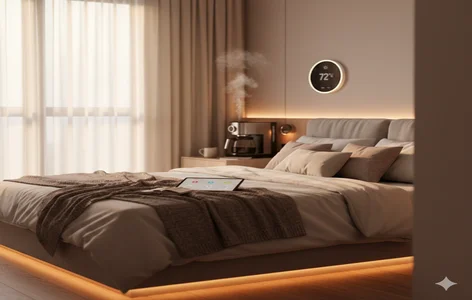
Home Automation Ideas: Smart Home Setup Guide 2025-26
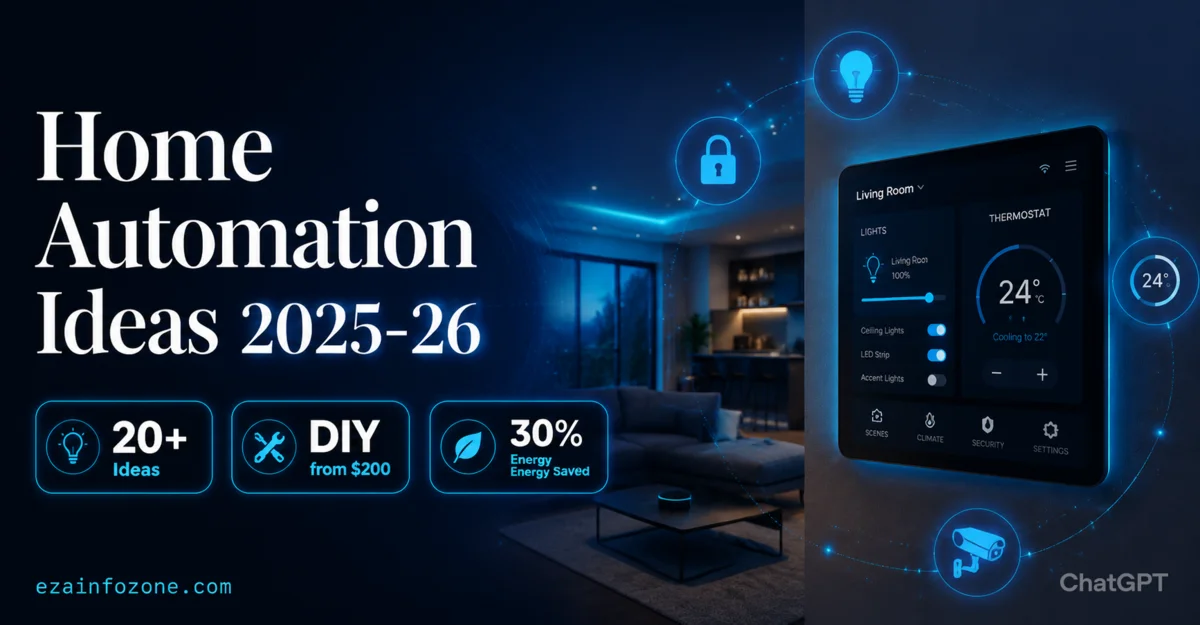
Home Automation Ideas: Smart Home Setup & Complete Installation Guide 2025-26
20+ actionable home automation ideas for 2025-26 — from beginner smart home setup to full Control4 home automation, room-by-room smart home ideas, and every budget covered.
The best home automation ideas for 2025-26 start with three essentials: a smart speaker hub (Amazon Echo or Google Nest), smart lighting (Philips Hue or LIFX), and a smart thermostat (Nest or Ecobee). Automate one room fully, then expand room by room. A complete smart home setup costs $200–$800 DIY — or $3,000–$20,000 with professional Control4 home automation installation.
- What Is Home Automation?
- 20 Best Home Automation Ideas 2025-26
- Smart Home Ideas by Room
- Best Home Automation Systems
- Smart Home Setup Guide
- DIY vs Professional Installation
- Smart Home Ideas for New Homes
- Smart Home Setup by Budget
- Home Automation for Energy Savings
- Buying Guide 2025-26
- Frequently Asked Questions
What Is Home Automation?
Home automation is the use of smart devices, apps, and voice assistants to control, schedule, and automate the systems in your home — lighting, heating and cooling, security, entertainment, and appliances — from a single interface or automatically based on rules and schedules you define.
In 2025-26, a complete home automation system is no longer a luxury. DIY smart home installation using Amazon Alexa, Google Home, or Apple HomeKit delivers a fully automated smart home for $200–$800 with no professional installer required for the majority of devices. From smart home ideas for new homes to retrofitting an older property, the options have never been more accessible or affordable.
The smart home system market has also been transformed by the Matter standard — a universal protocol supported by Amazon, Google, and Apple that allows smart devices from different brands to work seamlessly together in any home automation system.
20 Best Home Automation Ideas for 2025-26
These home automation ideas are ranked by daily impact — starting with changes that transform everyday life immediately and working down to advanced smart home system features. Each idea includes a difficulty rating: Easy (no wiring), Medium (minor configuration or wiring), or Pro (professional smart home installation recommended).
Schedule heat and AC to drop when you leave and return to comfort before you arrive. Saves $130–$180 per year — the single highest-ROI home automation idea, paying for itself in under 2 years.
EasySmart bulbs or switches in every room, controllable by voice, app, or schedule. Auto-off at sunrise, auto-on at sunset. One of the most impactful smart home ideas for cutting energy waste.
EasyKeyless entry with auto-lock, temporary codes for guests, and a video doorbell that shows visitors on your phone. Best security-focused smart home idea for families and frequent travelers.
EasySmart TV, smart speaker, and streaming all controlled by one “movie night” command — dims lights, turns on TV, and starts your service. The ultimate living room smart home idea.
EasyIndoor and outdoor cameras with motion alerts, night vision, and cloud recording. View your home live from anywhere via smartphone — a core home automation idea for peace of mind.
EasyTurn any appliance into a smart device for $10–$20. Schedule coffee makers, monitor energy use, and eliminate standby power drain on TVs and game consoles instantly.
EasyOne voice command or scheduled trigger: brighten lights gradually, adjust thermostat, start coffee, play your morning playlist — all automated. The gateway to a truly smart home setup.
EasyWater leak sensors under sinks and behind washing machines alert you before damage occurs. Smart smoke detectors send phone alerts even when you’re not home. Essential home automation ideas for any household.
EasySmart speakers in every room playing synchronized music or independent playlists by zone. Say “play jazz in the kitchen” and it just works — one of the best smart home ideas for entertaining.
EasyClose the garage from your phone when you forget, set auto-close timers, get alerts if left open, and let delivery drivers in securely — all from the app with no smart home installation required.
EasyMotorized blinds that open at sunrise and close at sunset automatically, controllable by voice. An excellent smart home idea for bedrooms, home offices, and rooms needing privacy control.
MediumWeather-based watering that skips rain days and adjusts for temperature. Saves 30–50% on outdoor water use versus traditional sprinkler timers. One of the greenest home automation ideas available.
MediumUses your phone’s location to trigger automations: lights on when you arrive home, thermostat adjusts when you leave, security arms automatically when everyone is out. Smart home setup at its most intelligent.
MediumSmart refrigerators with internal cameras, smart ovens you preheat from your commute, smart coffee makers on schedules — the kitchen is the richest room for smart home ideas in any household.
MediumReal-time whole-home energy dashboard showing which devices draw the most power. Average users cut bills by 15% after seeing their usage for the first time. A data-driven home automation idea that pays for itself fast.
MediumReplace standard switches with Lutron Caseta or Leviton smart switches to make any existing light smart without changing bulbs — the best smart home idea for new homes where you want to start right.
MediumAutomated “focus mode”: Do Not Disturb on smart speakers, lighting shifts to warm white, thermostat optimizes for productivity — one command starts it all. The smartest home automation idea for remote workers.
MediumProfessional Control4 home automation integrates every system — lighting, HVAC, AV, security, shades — into one touchpanel. The gold standard for whole-home automation and the most seamless smart home system available.
ProSeparate temperature zones per floor or room, each with its own thermostat or vent control. Heat only occupied rooms and save 20–35% versus single-zone HVAC. Requires professional smart home installation.
ProAutomated blackout curtains, acoustic lighting, Dolby Atmos speakers on home automation control, and a single-button “Movie Mode” that sets the entire room — the ultimate smart home idea for entertainment lovers.
ProSmart Home Ideas by Room
The most effective approach to smart home setup is room by room — fully automating each space before moving on. These are the best smart home ideas for every room in 2025-26, starting with the highest-impact spaces and working through the whole home.
- Smart TV + streaming control via Alexa or Google
- Philips Hue scene lighting (movie mode, relax)
- Smart speaker as the room hub
- Smart plug on entertainment center
- Motorized blinds for glare and privacy control
- Echo Show or Nest Hub for recipes & timers
- Smart coffee maker on morning schedule
- Smart plug on microwave & toaster oven
- Leak sensor under the sink
- Smart refrigerator with internal cameras
- Smart bulbs with sunrise alarm (gradual wake-up)
- Smart thermostat schedule — cooler at night
- Smart speaker for sleep sounds & alarm
- Automated blackout blinds at bedtime routine
- Smart plug on bedside lamps for voice control
- Automated “focus mode” with one voice command
- Smart lighting at 4000K for productivity
- Smart plug on PC for auto-shutdown schedules
- Smart speaker muted during calendar call hours
- Presence sensor for auto-lighting when seated
- Smart speaker for shower music and news briefing
- Leak sensor near shower and under basin
- Smart fan with humidity auto-trigger
- Smart towel rail on morning warming schedule
- Smart mirror with weather and calendar display
- Smart garage door with auto-close timer
- Video doorbell at front entry point
- Smart lock with keypad and temporary guest codes
- Smart outdoor lighting (dusk-to-dawn + motion)
- Smart irrigation on weather-based schedule
Best Home Automation Systems 2025-26
Choosing the right home automation system is the most important decision in your smart home setup. The platform you choose determines which devices work in your home, how well everything integrates, and your total smart home installation cost. Here are the top systems compared for 2025-26.
Amazon Alexa is the most widely adopted home automation system in 2025-26, supporting over 100,000 compatible smart home devices. The Alexa Routines feature is the best automation builder of any DIY platform — if-this-then-that logic with triggers including time, voice, motion, arrival, and sensor states. For home automation ideas for beginners, Alexa is the easiest starting point. Say “Alexa, discover devices” and it finds everything in your home automatically.
- Widest device compatibility
- Best routine automation builder
- Alexa Plus AI in 2026
- Free platform
- Works with every smart home brand
- Amazon ecosystem dependency
- Privacy concerns for some users
- Complex multi-step routines need learning
Google Home is the best home automation system for Android and Gmail households. Deep integration with Google Calendar, Google Maps (location-based smart home setup), and YouTube makes it the most contextually intelligent platform. The Nest Hub Max with Gemini AI in 2026 understands complex natural language commands and suggests home automation ideas based on your daily routines automatically, learning your preferences over time.
Apple HomeKit is the most secure home automation system in 2025-26. All device data is processed on-device and end-to-end encrypted — Apple cannot access your home data. Smart home installation with HomeKit requires Apple-certified devices, which means fewer options than Alexa but higher quality control and guaranteed privacy. The best smart home setup for iPhone-only households or anyone making privacy the top priority in their home automation system.
Control4 home automation is the professional standard for whole-home automation in 2025-26. A Control4 home automation system integrates every system in your home — lighting, HVAC, AV, security cameras, smart locks, motorized shades, and multi-room audio — into a single custom touchpanel and app. Unlike DIY smart home systems, Control4 home automation requires a certified dealer for installation and programming, but delivers a seamless, fully unified smart home that DIY platforms simply cannot match. The best control4 home automation ideas include custom “scenes” — Good Morning, Away Mode, Movie Night — that trigger dozens of devices simultaneously with a single tap.
- Every system fully integrated
- Custom programming for any automation idea
- Professional ongoing support
- Best AV and multi-room audio integration
- Adds real estate value to home
- High upfront cost ($3,000–$20,000+)
- Requires certified Control4 dealer
- Ongoing service and support fees
- Changes require dealer assistance
Home Automation System Comparison 2025-26
| System | Cost | Devices | Best For | DIY? | Matter |
|---|---|---|---|---|---|
| Amazon Alexa | Free | 100,000+ | Most households | ✔ | ✔ |
| Google Home | Free | 50,000+ | Android users | ✔ | ✔ |
| Apple HomeKit | Free | 5,000+ | iPhone users | ✔ | ✔ |
| Control4 | $3,000+ | All systems | Luxury / new build | ✘ | ✔ |
Smart Home Setup Guide: Step-by-Step 2025-26
This is the complete smart home installation guide for homeowners setting up their first home automation system in 2025-26. Follow these steps in order for the smoothest smart home setup experience, whether you’re starting with two devices or planning a whole-home automation system.
Choose Your Home Automation Ecosystem
Before buying any device, decide on your smart home platform: Amazon Alexa, Google Home, or Apple HomeKit. Base this on your existing phone (iPhone = HomeKit, Android = Google Home or Alexa) and which home automation ideas you plan to implement. Alexa works for most households. Once chosen, commit to that ecosystem for core devices — mixing platforms creates friction in your home automation system setup.
Set Up Your Smart Home Hub
Every smart home system needs a hub — the central controller that coordinates all devices. For Alexa: Amazon Echo 4th Gen (also a Zigbee smart home hub). For Google Home: Nest Hub or Nest Hub Max. For Apple: HomePod mini (doubles as HomeKit hub automatically). Place your hub in the most-used room — typically the living room or kitchen. A well-positioned hub improves the reliability of every home automation idea you build on top of it.
Install Smart Lighting First
Smart lighting is the highest-impact first category for most home automation ideas. Choose between smart bulbs (Philips Hue, LIFX) for rental-friendly smart home setup, or smart switches (Lutron Caseta, Leviton Decora) for permanent installation that works with any existing bulb. Smart switches are the better long-term home automation investment — especially for smart home ideas for new homes where you want control over every fixture from day one.
Install a Smart Thermostat
A smart thermostat is the single highest-ROI device in any home automation system. Google Nest Thermostat, Ecobee SmartThermostat, or Honeywell T9 all install in 20–30 minutes using included instructions. Connect to your ecosystem app immediately after smart home installation — this enables temperature control by voice and creates conditions for powerful home automation ideas like “set heating to eco when everyone leaves.”
Add Security Devices
A video doorbell (Ring, Google Nest Doorbell) and smart lock (August, Schlage Encode) transform home security for $150–$350 combined. Both connect to your ecosystem app and work with voice commands. Set smart home automation rules: auto-lock the front door at 10pm, get an alert when the doorbell rings, unlock for a specific guest code. These smart home ideas deliver immediate, practical value every single day.
Build Your Automation Routines
Routines transform individual devices into a true home automation system. In your app, create: a Good Morning routine (lights on gradually, thermostat up, news briefing), a Leaving routine (thermostat to eco, lights off, locks armed when the last person leaves), and a Good Night routine (locks checked, lights off, heating lowered). These three routines alone deliver the core promise of home automation — a home that runs itself.
Expand Room by Room
Once your core smart home system runs reliably, expand room by room using the home automation ideas above. Add smart speakers for multi-room audio, smart plugs to high-use appliances, and sensors: motion sensors for automatic lighting, leak sensors under sinks, window and door sensors for security. Each addition makes your home automation system more intelligent. The best smart home setups are built gradually — not all at once.
Smart Home Installation: DIY vs Professional
One of the most common questions in smart home setup is whether to install yourself or hire a professional. The answer depends on the complexity of the home automation system you want and your comfort with basic DIY tasks.
- Smart bulbs and smart plugs: Plug in and configure via app — no tools needed, 5 minutes per device
- Smart speakers and hubs: Plug in, follow the app setup — 10–15 minutes each
- Smart thermostat (Nest, Ecobee): 20–30 minutes, basic screwdriver, label the existing wires first
- Video doorbell (Ring, Nest): 30–45 minutes, replaces existing doorbell wiring, full instructions included
- Smart lock (August, Schlage Encode): 15–30 minutes, fits over existing deadbolt hardware
- Smart switches (Leviton, Lutron Caseta): 20–30 minutes per switch, turn off circuit breaker, connect 3–4 wires
- Security cameras (wireless): 10–20 minutes each, magnetic mount or single screw, app-guided setup
- Control4 home automation system: Requires a certified Control4 dealer — not available as DIY under any circumstances
- In-ceiling speaker installation: Requires drywall cutting, running cable through walls, and amplifier configuration
- Smart HVAC zoning: Duct modifications and multi-zone thermostat wiring require a qualified HVAC professional
- Structured cabling (Cat6 throughout): Whole-home network runs need an electrician or low-voltage specialist
- New-build smart home pre-wiring: Running all conduit, cable, and smart switch wiring during construction before drywall closes
Smart Home Ideas for New Homes 2025-26
New construction is the ideal time to implement the best smart home ideas, because wiring is run during framing before drywall goes up — eliminating the most expensive part of retrofit smart home installation. These smart home ideas for new homes have the highest impact when planned during construction.
- Smart in-wall switches, not just smart bulbs: Wire all lighting to smart switches (Lutron Caseta Pro) during framing. Standard bulbs work better with physical switches and the family can use them normally — the best long-term smart home idea for any new build
- Cat6 structured cabling throughout: Run Cat6 Ethernet to every room, TV point, and Wi-Fi access point location during framing — costs $500–$1,500 during construction vs $5,000+ in a finished home
- Pre-wire for in-ceiling speakers: Speaker cable in living room, kitchen, and master bedroom costs $100–$300 during framing — enables whole-home audio without any visible wires later
- Dedicated smart home panel location: A low-voltage panel room in a utility area for your home automation system hub, networking gear, and NVR security recorder
- C-wire at every thermostat location: Common wire required for Nest, Ecobee, and all smart thermostats — specify this to your electrician during the rough-in stage
- Conduit from garage panel to EV charger location: A $50 home automation idea during build that saves $1,000+ in retrofit costs when you get an electric vehicle
- Wired doorbell circuits at every entry point: Wired video doorbells are more reliable and have no batteries to replace — specify during electrical rough-in, not after
Smart Home Setup by Budget 2025-26
Every home automation budget produces real results when focused correctly. Here is the optimal smart home setup for four budget levels in 2025-26, from beginner starter to professional whole-home automation system.
Home Automation Ideas for Energy Savings
The best home automation ideas for energy savings pay for themselves within 1–3 years. These home automation system features are backed by measured energy data across thousands of homes in 2025-26, not estimates.
- Smart thermostat (Nest or Ecobee): 10–23% annual HVAC savings = $130–$180/year average. Pays for itself in 12–18 months. The single highest-ROI home automation idea in the entire smart home system category.
- Smart lighting with schedules: 10–15% reduction in lighting energy. LED smart bulbs plus automatic on/off schedules eliminate the single largest source of wasted home electricity: lights left on in empty rooms.
- Smart plugs with energy monitoring (Kasa EP25, Emporia): Identify phantom loads from TVs, game consoles, and chargers. Standby power averages 5–10% of total home electricity — smart plugs eliminate it for $10–$20 per outlet.
- Smart irrigation (Rachio 3, RainBird): 30–50% water reduction versus traditional timer-based systems. Weather-based scheduling skips rain days and adjusts for temperature completely automatically.
- Smart HVAC zoning: Heat and cool only occupied rooms. Saves 20–35% on heating and cooling in multi-story homes. Requires professional smart home installation but delivers the second-highest energy ROI after the smart thermostat.
- Home energy monitor (Sense or Emporia Vue): Real-time dashboard identifying the biggest energy users. Average users reduce bills by 15% in the first year just by seeing their usage clearly for the first time.
Smart Home Buying Guide 2025-26
- I want the most device options: Amazon Alexa — 100,000+ compatible products, best routine automation for any home automation ideas
- I use Android / Google services: Google Home — deep Android integration, Gemini AI, best natural language for smart home setup
- I use iPhone exclusively: Apple HomeKit — best privacy, seamless iOS integration, HomePod mini as the smart home hub
- I want professional whole-home integration: Control4 home automation — hire a certified dealer for a unified smart home installation across every system
- I’m renting: Smart bulbs + smart plugs + smart speaker — no permanent installation required, fully removable when you move
- I’m building a new home: Pre-wire during construction for smart switches, structured cabling, in-ceiling speakers — the smart home ideas for new homes section above covers exactly what to specify
- I want fast energy savings: Smart thermostat first, then smart lighting schedules — the highest ROI per dollar in any home automation system, hands down
🏠 Build Your Smart Home Step by Step
From home automation ideas to full smart home system — explore all our guides at EzaInfoZone.
Video Doorbell Guide: Enhance Home Security 2026 →Conclusion — Home Automation Ideas & Smart Home Setup 2025-26
The best home automation ideas in 2025-26 share one thing in common: they solve real, daily problems. A smart thermostat eliminates forgetting to turn the heating off. Smart lighting ends walking around the house switching lights off manually. A smart lock means never worrying whether you locked the front door. These are not novelty features — they are practical smart home ideas that make everyday life measurably better.
Start your smart home setup with the three highest-impact devices for your household: a hub, smart lighting, and a smart thermostat. Build routines that automate your day immediately. Expand room by room using the home automation ideas listed above. Whether you’re on a $200 starter budget or planning a $15,000 Control4 home automation system, the result is the same — a home that works for you, automatically, 365 days a year.