Bye Bye Alexa: Aqara FP300 Sensor Review That Runs On Batteries
Smart home automation is finally entering its “hands-free” era, and the Aqara FP300 Presence Sensor is one of the most exciting innovations to make that possible.
If you’re tired of saying “Alexa, turn on the lights” every time you walk into a room, or worse, waving your arms like a maniac just to keep bathroom lights from turning off, this review is for you.
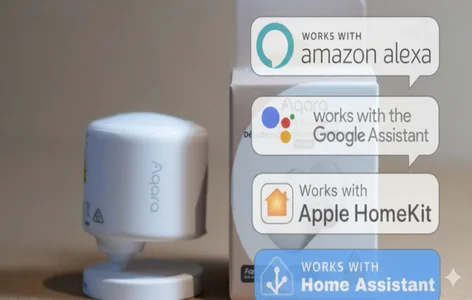
In this in-depth Aqara FP300 review, we’ll explore how this battery-powered millimeter-wave presence sensor works, why it’s different from traditional motion sensors, and how it integrates with Amazon Alexa, Apple HomeKit, Google Home, and Home Assistant.
What Is the Aqara FP300 Presence Sensor?
The Aqara FP300 is a 60GHz millimeter-wave presence sensor designed to detect human presence, not just movement.
Unlike traditional PIR (infrared) motion sensors, the FP300:
- Detects stationary humans
- Knows when someone enters or leaves a room
- Doesn’t require constant motion to stay active
- Works flawlessly in bathrooms, bedrooms, and offices
Most importantly…
👉 It’s battery powered, with up to 2–3 years of battery life.
That alone makes it a breakthrough device in smart home automation.
Why the Aqara FP300 Is Different from Motion Sensors
Traditional motion sensors rely on infrared heat movement. If you stop moving, lights turn off.
The Aqara FP300 uses 60GHz millimeter-wave radar, which:
- Detects breathing and micro-movements
- Identifies actual human presence
- Eliminates false “room empty” triggers
🚫 No more:
- Lights turning off while showering
- Bathroom lights shutting off mid-toilet
- Waving your arms to keep lights on
✅ Instead:
- Lights stay on as long as you’re present
- Automatically turn off when you leave
- Zero false positives (even after extended testing)
Battery-Powered = Bathroom Automation Finally Makes Sense
This is where the FP300 truly shines.
Because it’s battery powered, you can place it:
- In bathrooms
- On ceilings
- On walls with no wiring
- Anywhere without power outlets
Battery Life:
- Zigbee mode: up to 3 years
- Thread mode: around 2 years
For a continuous scanning presence sensor, that’s impressive.
Smart Home Ecosystem Compatibility
One of the biggest strengths of the Aqara FP300 is how flexible it is.
✅ Works With:
- Amazon Alexa
- Apple HomeKit
- Google Home
- Home Assistant
- Matter over Thread
- Zigbee
❌ Limited Compatibility:
Some older Amazon Echo devices (Echo Dot, Echo Pop, Echo Flex, older Echo Shows) do not support direct connection.
Thread vs Zigbee: What You Need to Know
The FP300 supports both Thread and Zigbee, which is rare, and powerful.
Zigbee Connection
✔ Longer battery life
✔ No Aqara hub required (with compatible Echo)
❌ Presence cannot be used as an Alexa routine trigger
Thread (Matter) Connection
✔ Full presence detection
✔ Direct Home Assistant integration
✔ Apple HomeKit works perfectly
❌ Slightly shorter battery life
The Best choice depends on your ecosystem, not the sensor itself.
Home Assistant Users: Just Buy It
If you’re using Home Assistant, the Aqara FP300 is a no-brainer.
Why?
- Direct local control
- No cloud dependency
- Full presence detection
- Privacy-focused setup
- Works without Aqara’s hub
This is exactly the direction modern smart homes should be moving in.
More Than a Presence Sensor
The FP300 isn’t just a presence detector, it’s basically a mini smart home hub.
Built-in Sensors:
- 🌡 Temperature sensor
- 💧 Humidity sensor
- 💡 Ambient light sensor
Smart Automations You Can Create:
- Turn on exhaust fan when humidity spikes
- Only turn lights on if it’s dark
- Adjust ventilation based on shower usage
- Trigger automations based on room conditions
All of this… on battery power.
Perfect Use Cases for the Aqara FP300
- 🚿 Smart bathrooms
- 🛏 Bedrooms
- 🧑💻 Home offices
- 🚪 Hallways
- 🧸 Nurseries
- 🏠 Privacy-focused smart homes
Privacy & Local Control
Despite using radar technology:
- No cameras
- No audio recording
- No image capture
- No cloud requirement (Home Assistant)
Everything runs locally, especially when paired with Thread.
Aqara’s Bigger Vision
The FP300 shows Aqara’s commitment to:
- Matter support
- Local control
- Multi-ecosystem compatibility
- Home Assistant-friendly devices
This positions Aqara ahead of competitors who still rely heavily on cloud services.
Pros & Cons
✅ Pros
- Battery powered (2–3 years)
- True presence detection
- Works with Alexa, HomeKit, Google, Home Assistant
- Thread + Zigbee support
- Excellent bathroom performance
- Temperature, humidity & light sensors
- Privacy-friendly
❌ Cons
- Alexa Zigbee presence limitations
- Slightly shorter battery life on Thread
- Google Home integration still limited
Final Verdict: Is the Aqara FP300 Worth It?
Absolutely.
If you want:
- Hands-free lighting
- Reliable bathroom automation
- Accurate presence detection
- Privacy-first smart home tech
The Aqara FP300 Presence Sensor is one of the best smart home devices of 2025.
It finally delivers what motion sensors never could, true intelligence.
Frequently Asked Questions (FAQ)
Is the Aqara FP300 better than a motion sensor?
Yes. It detects presence, not movement, making it far more reliable.
Does the Aqara FP300 work without an Aqara hub?
Yes, depending on your ecosystem (Alexa, HomeKit, Home Assistant).
Is it safe to use mmWave sensors at home?
Yes. 60GHz mmWave sensors are low-power and safe for indoor use.
Can I use it in bathrooms?
That’s where it performs best.
Does it work offline?
Yes, especially with Home Assistant and Thread.
👉 Try our Free Smart Home Automation Tools to plan your setup.