How Green Tech Is Revolutionizing Eco Friendly Smart Homes in 2026
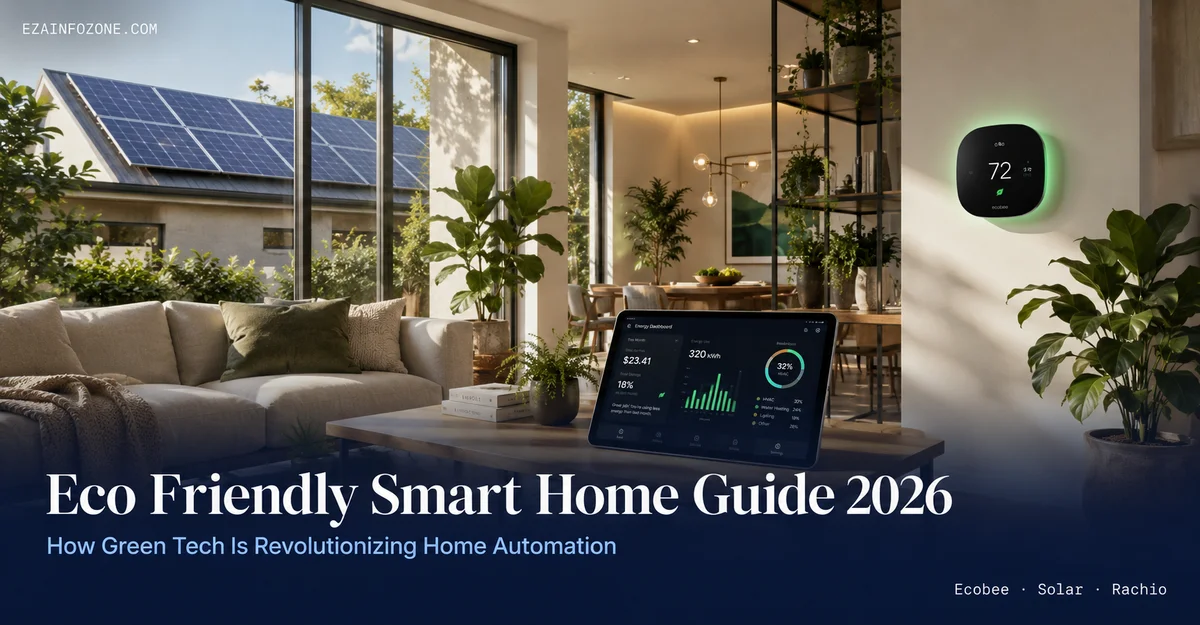
How Green Tech Is Revolutionizing
Eco Friendly Smart Homes in 2026
Smart thermostats, solar integration, LED lighting, and water conservation — real devices, real prices, and proven savings for a sustainable home.
An eco friendly smart home uses AI-powered thermostats, solar panels, LED smart bulbs, and energy monitors to cut household energy use by 15–30%. Start with an Ecobee or Nest thermostat ($199–$279), add Matter-compatible smart bulbs, then layer in solar and battery storage. Total payback on the first three upgrades: under 18 months.
- What Is an Eco Friendly Smart Home?
- Why Green Home Automation Matters in 2026
- Smart Energy Management: Thermostats
- Solar Integration: Power Your Green Home
- Smart Lighting: 80% Less Energy
- Smart Water Conservation Systems
- Smart HVAC: Cleaner Air, Lower Bills
- Battery Storage & Energy Recycling
- AI & Data Analytics for Sustainability
- Government Incentives 2026
- Step-by-Step Setup Guide
- Frequently Asked Questions
What Is an Eco Friendly Smart Home?
An eco friendly smart home is a residence where intelligent automation and energy-efficient technology work together to minimize environmental impact — automatically, without sacrificing comfort. It is not simply a home with smart speakers or app-controlled lights. It is a fully integrated system where every device communicates, learns, and optimizes energy and water use in real time.
Green tech in home automation covers three pillars: smart energy management (thermostats, plugs, solar), efficient connected devices (LED smart bulbs, eco-rated appliances), and automated control (scheduling, occupancy sensing, geofencing). When these work together, the home stops wasting resources — lights turn off when rooms are empty, heating pre-conditions before you arrive home, and excess solar energy charges a battery instead of going to waste.
In 2026, the Matter 1.4 protocol is the universal standard connecting devices from different brands — Amazon Alexa, Google Home, and Apple Home all support it. This means your Ecobee thermostat, Nanoleaf bulbs, and TP-Link smart plugs all talk to each other through a single app, making green home automation more accessible than ever before.
Why Green Home Automation Matters in 2026
The average U.S. household spends $1,900 per year on energy (U.S. DOE, 2025). Energy prices have risen 34% since 2020. At the same time, the technology to reduce that bill has never been cheaper or more effective. Green home automation targets the four biggest energy drains in any home: HVAC (50% of energy use), lighting (15%), appliances and phantom power (10%), and water heating (18%).
Smart home energy efficiency is also backed by strong government incentives. The federal 30% Investment Tax Credit (ITC) applies to solar panels and battery storage through 2032. Many utilities offer $100–$200 rebates on qualifying smart thermostats. These factors combine to make 2026 the most financially attractive time to upgrade to a green smart home.
Smart Energy Management: The Heart of Every Eco Friendly Smart Home
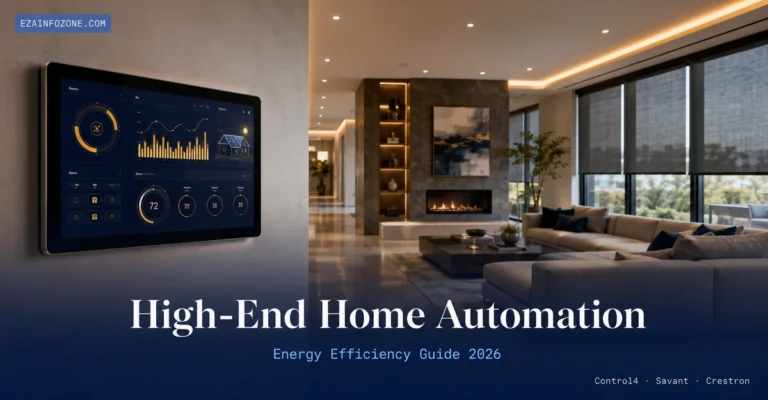
Heating and cooling is the single largest energy expense in any home — 50% of total electricity use. A smart thermostat is therefore the most impactful first upgrade for smart home energy efficiency. Unlike a basic programmable thermostat, a smart thermostat learns your schedule, detects occupancy, reads weather forecasts, and adjusts temperature automatically to eliminate waste. AI energy meters and smart plugs round out the stack.
- Built-in air quality sensor
- Room sensor included
- Matter + all voice assistants
- Best verified savings data
- Highest price of the three
- C-wire or adapter needed
- True self-learning AI
- Premium design
- Deep Google Home integration
- No Matter support
- No room sensors
- Lower savings vs. Ecobee
- Most affordable
- Room sensor included
- 5-year warranty
- No Matter support
- Basic app interface
Beyond thermostats, AI energy meters like the Sense Energy Monitor ($349) track every circuit in your home and identify which appliances are drawing the most power. Smart plugs (TP-Link Kasa EP25, $29.99) cut phantom power automatically — the U.S. DOE estimates standby devices waste 5–10% of total home electricity, costing $100–$200 per year.
For our full deep-dive on thermostat energy savings, see the 10 benefits of smart thermostats in home automation.
Solar Integration: Powering Your Eco Friendly Smart Home Naturally
Solar energy is the backbone of a truly solar powered smart home. In 2026, solar panels cost 89% less than in 2010, and new systems integrate directly with smart home hubs — allowing real-time monitoring of energy production, automated battery charging, and automatic switching between solar, battery, and grid power based on demand and time of day.
| Battery System | Capacity | Peak Power | Price (before ITC) | Smart Integration |
|---|---|---|---|---|
| Tesla Powerwall 3 | 13.5 kWh | 11.5 kW | $11,500 | Storm Watch + Tesla App |
| LG Energy Solution RESU | 16 kWh | 7 kW | $13,000 | LG App (basic) |
| Enphase IQ Battery 5P | 5 kWh/unit | 3.84 kW | $4,000/unit | Enphase App + Grid Profile |
| Sonnen Eco 10 | 10 kWh | 3.3 kW | $9,500 | Peer energy sharing |
The smartest feature of 2026 solar systems is demand shifting — automatically running the dishwasher, EV charger, or washing machine during peak solar production hours (typically 10am–3pm) rather than drawing grid power. This can increase solar self-consumption from 30% to 80–90%, dramatically improving payback time.
Smart Lighting That Cuts Your Lighting Bill by 80%
Lighting accounts for roughly 15% of residential electricity use worldwide. Replacing incandescent and halogen bulbs with LED smart bulbs cuts that consumption by 75–80% immediately (Energy Star, 2025). Add smart automation — motion sensing, daylight linking, scheduling, geofencing — and lights simply stop running when no one needs them, cutting consumption further by 30% on top of the LED savings.
Brands like Philips Hue and Nanoleaf offer bulbs lasting up to 25,000 hours while consuming minimal energy. In 2026, both offer Matter-compatible options alongside their proprietary ecosystems. For outdoor spaces, solar-powered smart lights (Ring Solar Pathlight, $29.99) require zero grid electricity, making them the greenest option available.
Smart Water Conservation: Green Automation Beyond Electricity
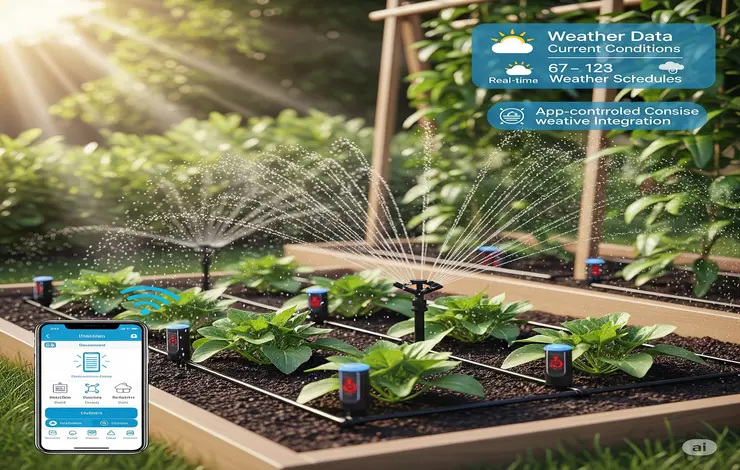
A complete eco friendly smart home addresses water as well as energy. The average U.S. household uses 80–100 gallons of water daily, with outdoor irrigation accounting for up to 30% of that total (EPA, 2025). Smart irrigation controllers and leak detection sensors deliver some of the fastest payback of any green home upgrade.
| Device | Category | Price | Savings | Key Feature |
|---|---|---|---|---|
| Rachio 3 (8-zone) | Irrigation | $229.99 | Up to 50% water | Weather skip + EPA WaterSense certified |
| RainBird ST8I-WiFi | Irrigation | $119.99 | Up to 35% water | Schedule-based, app + Alexa |
| Moen Flo Smart Shutoff | Leak Detection | $499 | Prevents damage | Auto shutoff + daily health test |
| Govee Water Sensor 4pk | Leak Detection | $28.99 | Prevents damage | App alert + audible alarm |
The Rachio 3 connects to local weather data and automatically skips irrigation when rain is forecast, adjusting run times based on humidity, wind, and temperature. EPA WaterSense certification confirms it saves at least 20% vs. a standard timer — real-world users consistently report 30–50% in the first season. For the full picture on smart water devices, visit our smart home water management guide. Also see our dedicated smart irrigation system guide for advanced setup tips.
Smart HVAC Systems: Cleaner Air, Lower Bills
Heating, ventilation, and air conditioning (HVAC) systems are traditionally the biggest energy consumers in any home. Green smart HVAC systems in 2026 use AI and IoT sensors to automatically balance temperature zones, filter indoor air with eco-rated purifiers, and reduce power draw during off-peak hours — all without any manual input from the homeowner.
Key smart HVAC features to look for in 2026: zone control (heat or cool only occupied rooms), renewable energy integration (HVAC can draw from solar battery during peak rate hours), and predictive maintenance alerts (smart systems flag filter replacements and efficiency drops before they waste energy). Leading brands including Lennox, Carrier, and Trane now offer direct integration with Ecobee and Nest thermostats for fully coordinated green home automation.
Battery Storage & Energy Recycling: The Path to Net-Zero
Smart energy storage is the final layer of a fully sustainable eco friendly smart home. Home batteries do not just store power — they intelligently distribute it throughout the day based on solar production, utility rates, and your home’s real-time consumption. In 2026, home battery systems have become smarter, cheaper, and more integrated with smart home platforms than ever before.
Three key use cases make battery storage essential for smart home sustainability: using stored solar power at night (eliminating grid draw after dark), feeding excess energy back to the grid during peak rate hours to earn utility credits, and providing backup power during outages without fossil fuels. Companies like Tesla (Powerwall 3), LG Energy Solution (RESU Prime), and Sonnen (Eco series) lead this segment, with Sonnen uniquely offering peer-to-peer energy sharing between neighboring households.
AI & Data Analytics: The Intelligence Behind Green Home Automation
Artificial intelligence is the silent force that makes modern green home automation effective. Without AI, smart home devices are simply app-controlled gadgets. With AI, they become a coordinated system that learns, predicts, and optimizes without any user input.
In 2026, AI tools in eco friendly smart homes: track your real-time carbon footprint (apps like Sense and Emporia visualize this automatically), recommend energy-saving behaviors based on your actual usage patterns, predict maintenance needs before efficiency drops (dirty HVAC filters can increase energy use by 15%), and automatically shift high-energy tasks to off-peak rate hours or peak solar production windows. The Sense Energy Monitor ($349) uses machine learning to identify individual appliances by their electrical fingerprint — no manual labeling required. Within 2–4 weeks it can tell you exactly how much your refrigerator, EV charger, or HVAC is costing per day.
Government Incentives & Eco Rewards for Green Smart Homes in 2026
The financial case for building an eco friendly smart home has never been stronger, largely due to government incentives that directly reduce upfront costs. These apply to both the green tech devices and the renewable energy systems that power them.
| Incentive | Who Offers | Amount | Applicable To | Expires |
|---|---|---|---|---|
| Investment Tax Credit (ITC) | Federal (U.S.) | 30% of cost | Solar + battery storage | 2032 |
| Energy Efficient Home Improvement Credit | Federal (U.S.) | Up to $3,200/yr | Insulation, HVAC, windows | 2032 |
| Smart Thermostat Rebate | Utility (varies) | $50–$200 | Qualifying smart thermostats | Ongoing |
| State Solar Rebates | State programs | $500–$2,000 | Solar installations | Varies by state |
| Green Home Mortgage Rate | Select lenders | 0.25% rate reduction | Energy-certified homes | Ongoing |
To find your state’s specific rebates and incentives, visit the DSIRE database (dsireusa.org) — the most comprehensive resource for U.S. state and utility green energy incentives, updated monthly. Most smart thermostat manufacturers (Ecobee, Nest) also maintain a rebate finder tool within their apps that automatically identifies utility rebates available at your address.
Step-by-Step: Build Your Eco Friendly Smart Home in 2026
You do not need to transform your home overnight. This phased approach lets you start saving immediately with a small investment, then layer on advanced smart home energy saving upgrades as your budget allows. Phase 1 alone typically saves $350+ per year.
- 01Audit your energy use (Free — Week 1)
Download your utility’s app or log into your smart meter portal to view hourly consumption data. Identify your top three energy draws — typically HVAC, water heater, and plug loads. This baseline guides every purchase decision and lets you measure real savings later.
- 02Install a smart thermostat ($199–$279 — Week 1)
Replace your existing thermostat with an Ecobee Premium or Google Nest Learning. Most installs take 30 minutes. Enable geofencing so the thermostat switches to Eco mode automatically when everyone leaves. First-month savings are typically visible on your next utility bill.
- 03Switch to LED smart bulbs ($150–$300 — Month 1)
Replace all incandescent and halogen bulbs with Matter-compatible LED smart bulbs. Start with high-use areas: living room, kitchen, bedrooms. Add motion sensors to bathrooms and hallways. Set outdoor lights to turn off at sunrise automatically.
- 04Add smart plugs to eliminate phantom power ($30–$50 per plug)
Plug your entertainment center, home office, and kitchen appliances into smart plugs. Create a “leave home” routine that turns off all non-essential plugs when your phone leaves the geofence. Check the energy usage reports in 30 days to see actual savings.
- 05Install smart irrigation + leak detection ($230–$530)
Replace your sprinkler timer with a Rachio 3 and add water leak sensors under sinks and behind appliances. The Rachio pays for itself in under two seasons through water bill savings alone.
- 06Add an energy monitor ($169–$349 — Month 2–3)
Install a Sense or Emporia Vue 3 in your electrical panel to see exactly which circuits consume the most. Use the data to identify the next upgrade priority — often the water heater or a high-draw appliance left on standby.
- 07Evaluate solar + battery storage ($12,000–$25,000 after ITC — Year 1+)
After 6–12 months of smart home data, you have precise consumption figures to right-size a solar quote. Get three installer quotes, apply the 30% ITC, and check your state rebate at dsireusa.org. Your smart home data prevents over-paneling and maximizes ROI.
For a complete room-by-room breakdown of smart home upgrades, visit our home automation ideas and smart home setup guide 2025–2026.
| Device / Upgrade | Eco Benefit | Homeowner Benefit | Approx. Payback |
|---|---|---|---|
| Smart Thermostat | Reduces CO₂ emissions ~1.3t/yr | Saves ~$183/yr on HVAC bills | 1.4 years |
| LED Smart Bulbs | 80% less lighting energy used | Saves ~$220/yr on lighting bills | 1.4 years |
| Smart Plugs | Eliminates phantom power waste | Saves $100–$200/yr | 1.3 years |
| Smart Irrigation | Saves 15,000–30,000 gal water/yr | Saves ~$95/yr on water bills | 2.4 years |
| Solar + Battery | Net-zero grid electricity | Saves $1,200–$1,800/yr | 7–10 years |
Frequently Asked Questions: Eco Friendly Smart Home 2026
Ready to Build Your Eco Friendly Smart Home?
Start with our complete room-by-room smart home setup guide — device picks, compatibility charts, and budget breakdowns for every tier.
View Complete Smart Home Setup Guide →